Bariatric Patient Pipeline
Bridging Bariatric Patient Conversion Rates and Practice Growth

• Rule #1: Know Your Numbers: The foundation of any successful bariatric practice marketing program! Having a firm grasp on your bariatric patient acquisition data is crucial for developing and gauging effective marketing strategies.
• Rule #2: Make It Easy for Patients to Find You: Patients use online searches to find healthcare services more than anything else. With so much at stake, you must leverage online search strategies and tools to get your bariatric surgery program directly in front of them.
• Rule #3: Use Online Seminars to Increase Leads: If you aren’t offering online bariatric seminars to prospects, your competitors probably do—and they are taking your share of new bariatric patients.
Now, the fourth rule: Increase conversions rates throughout the entire patient pipeline. This specifically includes patient conversion rates for:• Leads to Surgery
• Seminars to Surgery
• Consults to Surgery
This is important because we’ve seen compelling results from our own studies that have shown direct correlation between positive bariatric patient surgery conversion rates and success bariatric surgery programs.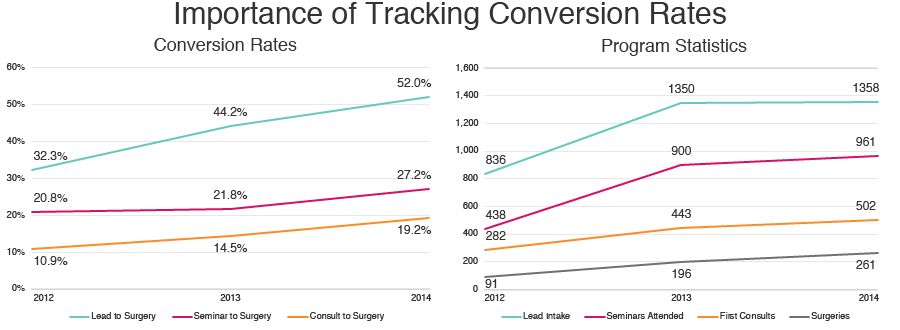 Take a moment to think about how each line represents a different phase of the patient pipeline. Notice in the left column how patients are more likely to get surgery (convert) the farther they move down the lead–to-seminar-to-consult pipeline.The takeaway is that it’s not enough to just have a great marketing strategy that gets prospects to become aware of your program. Instead, you must also have a well-managed patient pipeline that can retain prospects and nurture them through the entire journey.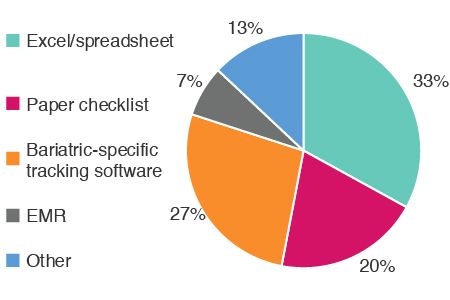
• Where do our leads come from?
• Where do our patients stall?
Below is an example of how our platform provides a simple yet powerful illustration of where your patients are in their entire journey—including post-operation.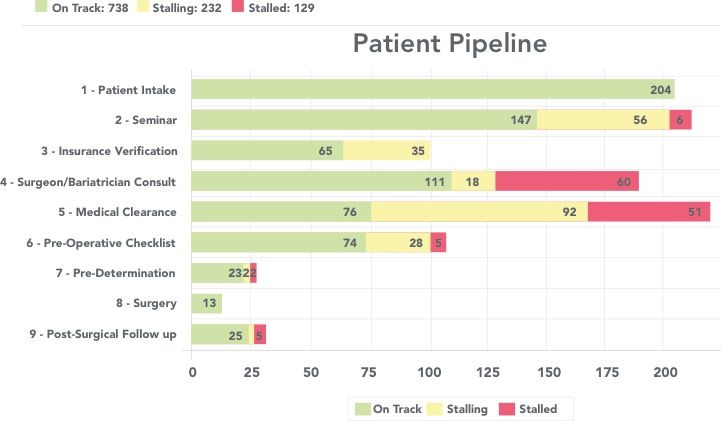 In this example, the practice does well with getting prospects into the program (patient intake, seminar and insurance verification). But notice how there’s a sudden surge in stalled patients during the consult and clearance stages. If not already lost, then these prospects are very likely to drop out of the program (and likely go elsewhere).