Medical marketing strategies range from having an effective website to your advertising, digital marketing, educational videos, and more.
However, when it comes to driving more qualified leads to your medical business, understanding the medical marketing funnel is of the utmost importance.
So in this article, let’s talk about what a medical marketing funnel is. That way you can implement a great strategy for your business that improves customer outcomes and grows your brand.
The Benefits Of A Medical Marketing Funnel
Having a medical marketing funnel in place has several benefits. Here’s why to use medical marketing funnels:
Attract more leads
Generating leads is ultimately the most important part of any health practice. If you don’t have any patients to serve, then you can’t hire doctors and support staff.
That being said, when you have a funnel, the first step of that funnel is to attract new and potential patients to your company.
Explain your services
Having a strategic marketing funnel for your medical practice helps you explain what you do at a high level. You can get into details about the differences and advantages between what you offer versus the competition.
This ultimately can set you apart in a competitive health field.
Capture data and feedback
A marketing funnel can help you capture user behavior, engagement, and direct feedback in the form of surveys.
You can also create a follow-up system via a marketing funnel. This allows you to stay engaged with your customers.
Ultimately, you can let your patients tell you exactly what they want, when they want it, and how they want it. You can design new services and offerings around that direct market feedback
That being said, let’s talk about what a medical marketing funnel entails.
Medical Marketing Funnel: What Is It?
A medical marketing funnel can be strategized in four parts. Let’s talk about the four categories of the funnel step-by-step.
Awareness
In the awareness stage, you’re ultimately simply trying to get brand exposure. You’re trying to help more patients know that you exist, where you’re located, and what services you offer. Someone at this stage may not even be aware that they have a problem.
For instance, if they have back pain, they may not be aware of the symptoms that indicate that they could have a serious issue that’s worth seeing a doctor for.
Consideration
At this stage, someone has to understand that they have a problem, but now they need to be convinced that there are actually solutions that can help them.
Therefore, this is the time to tell them that your solutions can potentially help the problems, pain, or symptoms that they’re feeling. It’s one of the most important marketing strategies for the medical field.
Conversion
At the conversion stage, this is where you ask someone to come in for an appointment, see a specialist, or even follow up on an appointment.
Ultimately, you’re taking mere thoughts and ideas and turning it into action.
Retention
Obviously, churn is something that can negatively affect your hospital or healthcare practice.
The more patients you retain for follow ups and repeat services, the higher your revenues will be. This ultimately expands your offerings, investments in equipment, and more. Therefore,
retention is an important part of funnels because it focuses on building that patient relationship over the long run.
That being said, let’s talk about the different stages of a funnel.
The stages of a funnel
There are three primary stages of a funnel:
The top stage
This is related to awareness. This is where you’re simply trying to create a broad message that starts to have a conversation meeting the patients where they’re at. Middle funnel.
The middle stage
At the middle funnel of the stage, you’re starting to nurture patients. You’re starting to provide comparisons, more detailed information about your services, and additional education. This also grows trust between you and the patient.
The bottom stage
This is where patients become converted. They become loyal to your practice, doctors, and medical care.
In the next section, let’s talk about some specific tactics that go into marketing funnels.
Specific marketing funnel tactics
While there is a near infinite amount of tactics you use in your marketing funnel, there are a few that are particularly powerful. Let’s cover how to use medical marketing funnels:
Medical call centers
Call centers can take inbound calls, outcome calls, schedule appointments, follow-ups, and even verify insurance. This is incredibly important for all stages of your funnel.
Blog posts
People can find you online and read about your offerings and other things on your website.
Infographics
This can help take complex information and turn it into something that’s easy to understand.
Radio, billboard, and TV ads
Classic advertising still works incredibly well for health centers. Leveraging these is an important part of marketing when it comes to your funnel.
Reach Out To Guideway Care Sequence of Activation For A Medical Marketing Funnel Today
At Guideway Care, we are experts in call center videos, digital advertising, and marketing funnels for medical services.
No matter what type of medical marketing service you need, our experts can help you put together a plan that meets your needs. We can help you reach more people so that way you can change lives while focusing on your own core competencies.



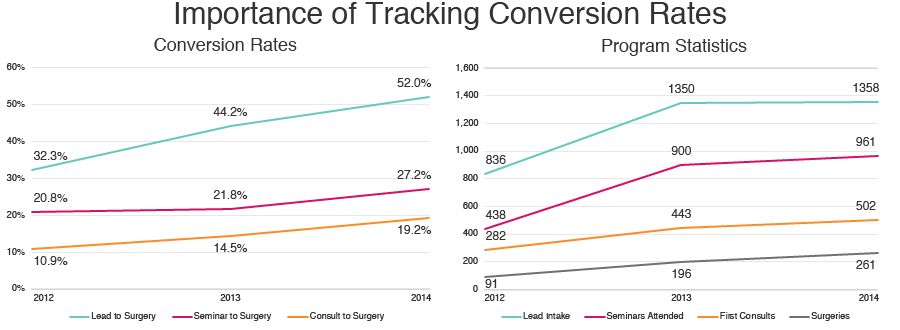 Take a moment to think about how each line represents a different phase of the patient pipeline. Notice in the left column how patients are more likely to get surgery (convert) the farther they move down the lead–to-seminar-to-consult pipeline.



 However, there are options thanks to weight loss procedures performed at the many world class facilities such as MountainView Weight Loss Center in Las Cruces, N.M., Park Nicollet Bariatric Surgery Center in Minneapolis and several other bariatric practices around the country that have partnered with Guideway Care. Together we provide long term-solutions to bolster patient engagement, improve patient management and generate positive patient outcomes.
For individuals suffering from severe obesity, attempts at weight loss can be a challenging cycle of disappointment and negative reinforcement. Traditional weight loss methods like diet and exercise often fail to deliver the results needed for a severely obese person to reach and maintain a healthy weight. This lack of sustainable results can result in a sense of hopelessness and apathy that overwhelms the seriousness of underlying health concerns. To give severely obese individuals a better chance at an improved quality of life, a more effective option is needed.
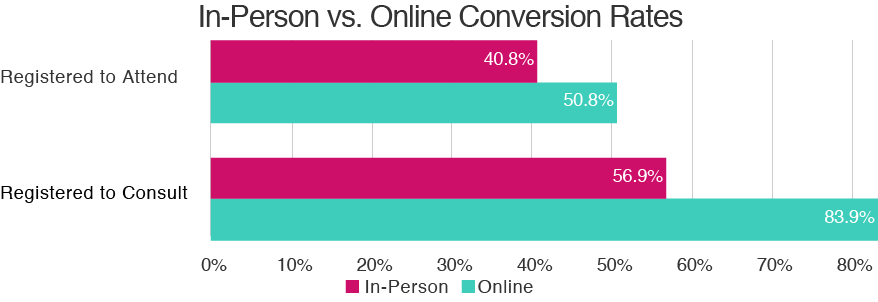
This is why many bariatric programs have teamed with Guideway Care to provide online seminars, housed on the practice’s website. These are designed to attract new patients and inform the patient of his or her treatment options. They also have the opportunity to view the video from the comfort of their home and do not have to travel, which for some severely obese people is an arduous task.
“The online course is an alternative to attending one of our regularly scheduled seminars, in-person,” said Stephan Myers, MD, FACS, who works at Riverside Methodist Hospital in Columbus, Ohio. “The online bariatric course provides information to help you decide if bariatric surgery is right for you. It’s a convenient way to learn about our bariatrics program from the comfort of your home, at your personal computer.”
Combine Guideway Care online seminars with our web-based LeadTracker™, which captures and tracks your patients from initial intake through every stage of the patient process under your care, and you are armed with the right tools to provide optimum care for your patients.
Fortunately weight loss procedures are now more practical, viable and more easily accessible than ever before for a wider range of patients. A dedicated team of experienced specialists and surgeons use only the latest technology and the most proven methods to provide truly world class care.
For anyone curious about the many outstanding and proven bariatric procedures available, an online seminar is the best way to learn about the surgery. With a wide range of treatment to choose from, any patient will be guided toward the exact strategy that’s right for them. Because bariatric surgery is not a one-size-fits-all procedure, highly experienced surgeons work closely with each and every patient throughout the process, from inquiry through post-op, to ensure all patients receive the top-notch care they need.
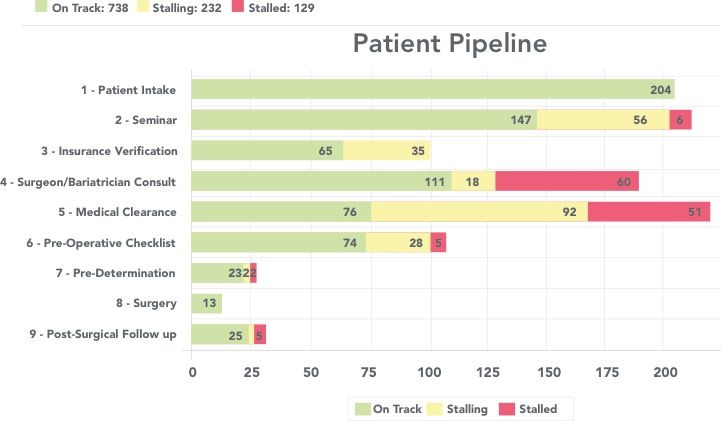
This is where the LeadTracker™ proves to be a valuable tool. With one click of the mouse, you can tell where each patient is in the process.
Because severe obesity is a life threatening concern, anyone dealing with its effects, limitations and consequences simply can’t afford to wait any longer before taking action. If your practice does not have an online seminar presence or a way to track the progress of your patients, your practice is not working as efficiently as it could be, and your patients are suffering.
With the LeadTracker™, your practice runs more efficiently and is more productive, as the program simplifies and streamlines patient intake, appointment scheduling and outreach efforts.
It’s a win for your patient population and for your practice. Don’t delay, visit
However, there are options thanks to weight loss procedures performed at the many world class facilities such as MountainView Weight Loss Center in Las Cruces, N.M., Park Nicollet Bariatric Surgery Center in Minneapolis and several other bariatric practices around the country that have partnered with Guideway Care. Together we provide long term-solutions to bolster patient engagement, improve patient management and generate positive patient outcomes.
For individuals suffering from severe obesity, attempts at weight loss can be a challenging cycle of disappointment and negative reinforcement. Traditional weight loss methods like diet and exercise often fail to deliver the results needed for a severely obese person to reach and maintain a healthy weight. This lack of sustainable results can result in a sense of hopelessness and apathy that overwhelms the seriousness of underlying health concerns. To give severely obese individuals a better chance at an improved quality of life, a more effective option is needed.
This is why many bariatric programs have teamed with Guideway Care to provide online seminars, housed on the practice’s website. These are designed to attract new patients and inform the patient of his or her treatment options. They also have the opportunity to view the video from the comfort of their home and do not have to travel, which for some severely obese people is an arduous task.
“The online course is an alternative to attending one of our regularly scheduled seminars, in-person,” said Stephan Myers, MD, FACS, who works at Riverside Methodist Hospital in Columbus, Ohio. “The online bariatric course provides information to help you decide if bariatric surgery is right for you. It’s a convenient way to learn about our bariatrics program from the comfort of your home, at your personal computer.”
Combine Guideway Care online seminars with our web-based LeadTracker™, which captures and tracks your patients from initial intake through every stage of the patient process under your care, and you are armed with the right tools to provide optimum care for your patients.
Fortunately weight loss procedures are now more practical, viable and more easily accessible than ever before for a wider range of patients. A dedicated team of experienced specialists and surgeons use only the latest technology and the most proven methods to provide truly world class care.
For anyone curious about the many outstanding and proven bariatric procedures available, an online seminar is the best way to learn about the surgery. With a wide range of treatment to choose from, any patient will be guided toward the exact strategy that’s right for them. Because bariatric surgery is not a one-size-fits-all procedure, highly experienced surgeons work closely with each and every patient throughout the process, from inquiry through post-op, to ensure all patients receive the top-notch care they need.
This is where the LeadTracker™ proves to be a valuable tool. With one click of the mouse, you can tell where each patient is in the process.
Because severe obesity is a life threatening concern, anyone dealing with its effects, limitations and consequences simply can’t afford to wait any longer before taking action. If your practice does not have an online seminar presence or a way to track the progress of your patients, your practice is not working as efficiently as it could be, and your patients are suffering.
With the LeadTracker™, your practice runs more efficiently and is more productive, as the program simplifies and streamlines patient intake, appointment scheduling and outreach efforts.
It’s a win for your patient population and for your practice. Don’t delay, visit