2018 Healthcare Trends We Expect for Marketing, IT and CRM
It’s actually not that hard to make confident predictions about what will be the key trends for healthcare marketing and healthcare CRM in 2018, especially if you closely follow what’s going on in the healthcare industry. The trick is to take a few moments to step back from daily observations and to try to find common themes that are emergent.
With that in mind, here are some trends we are anticipating for 2018!
As Guideway Care Central/Western Regional Director, Chris Stearns is one of our most reliable resources for awareness of what is going on in our industry. Guideway Care is a cloud-based technology and services company that improves profitability and patient outcomes for hospitals and practices through end-to-end patient engagement solutions backed by clinical and non-clinical teams. Its HIPAA-compliant, SaaS platform improves care team workflows, automates patient communication and tracks patient progress to optimize the patient journey. Since 2004, leading healthcare providers have trusted Guideway Care to help acquire, manage and engage patients through complex episodes of care.
Modifying Healthcare Marketing for Millennials
In 2018, healthcare marketing will take unprecedented steps to market healthcare to Millennials. There’s no reason to debate about the precise years for when this generation was born. The bottom line is most (if not all) Millennials are now solidly in adulthood, and that means they are the newest demographic in healthcare. There’s also no reason to discuss the finer points of what makes Millennials Millennials. All that needs to be said is they play by a different set of rules when it comes to how they make decisions and engage with brands—and this is a riddle healthcare marketers will be attempting to solve in 2018.More Mobile-First
In 2018, healthcare marketing and IT will take unprecedented steps to adopt “Mobile-First.” We’re now in an era where it’s not enough to say “mobile healthcare” will be a trend. That’s already happened. In our most recent blog, “Five Key Mobile Website Design Tips for Hospitals and Clinics,” we touched on the subject of “mobile-first” as it relates to a major Google shakeup for healthcare SEO, and you can expect for us to talk more about this in 2018. Even if you aren’t familiar with the concept, the “mobile-first” term isn’t hard to discern: It’s the best practice of prioritizing mobile technologies over others. For SEO, it means search engines will first look to the mobile version of a Website to determine who gets the best SERP (search engine results) rankings. Mobile-first isn’t just about SEO though. Virtually anything that is part of a patient’s mobile device UX (user experience) — social media, apps, widgets, videos, etc. — will need to look and feel like it was a priority and not an afterthought.IoT, mHealth and Telehealth Waits for Cybersecurity Improvements
In 2018, healthcare IT will take unprecedented steps to improve cybersecurity and open more doors for new medical technologies that can radically improve outcomes and revenues. We are also in an era where healthcare is grappling with with having both too much and too little—and it’s potentially stalling something great advances in healthcare. First, there’s too much access to patient information. On one hand, that’s wonderful—and it ties in nicely with more and more patients using the Internet (especially mobile devices) to find healthcare providers, engage with caregivers and improve their outcomes. On the other hand, access and information has put many hospitals at risk because there’s too little cybersecurity. (Unfortunately, the “ransomware” trend from the past couple years is probably going to continue in 2018.) Meanwhile, the medical device industry is aching to exploit the vast advantages of IoT (Internet of Things), mHealth (mobile health), telehealth and other platforms that can have monumental benefits for healthcare, both in terms of providing more and better care while reducing costs. The conflict is with how these innovative devices need access to all of that information—on largely underprotected networks. As a result, their potential is not being fully leveraged, which in turn slows continued innovation. For those reasons, you can be assured the healthcare and medical device communities will be putting significant effort into improving cybersecurity in 2018.As Guideway Care Central/Western Regional Director, Chris Stearns is one of our most reliable resources for awareness of what is going on in our industry. Guideway Care is a cloud-based technology and services company that improves profitability and patient outcomes for hospitals and practices through end-to-end patient engagement solutions backed by clinical and non-clinical teams. Its HIPAA-compliant, SaaS platform improves care team workflows, automates patient communication and tracks patient progress to optimize the patient journey. Since 2004, leading healthcare providers have trusted Guideway Care to help acquire, manage and engage patients through complex episodes of care.






 Mobile Devices Send and Receive Messages
mHealth engages patients through text and multimedia messaging, mobile apps, patient portals, and through interactive devices that track data and instantly communicate results. This improvement in the process allows you, as the care team, to recognize and address complications in real time resulting in a significant reduction in readmission rates and increase in patient success. You can also use real-time communication to analyze and adjust your own practices by noting trends in data and making adjustments to your patients’ coordinated care.
Mobile Access to a Patient Portal Allows the Patient to Act on Your Messaging
Online portals offer secure access to patient information and provide a resource for continuous patient engagement. An online portal enables both the patient and the doctor to know, see, or find vital patient info in one convenient place. Easily housed on your website, both you and your patient can view, store and record information, schedule appointments, refill medications and communicate with ease.
Mobile Devices Send and Receive Messages
mHealth engages patients through text and multimedia messaging, mobile apps, patient portals, and through interactive devices that track data and instantly communicate results. This improvement in the process allows you, as the care team, to recognize and address complications in real time resulting in a significant reduction in readmission rates and increase in patient success. You can also use real-time communication to analyze and adjust your own practices by noting trends in data and making adjustments to your patients’ coordinated care.
Mobile Access to a Patient Portal Allows the Patient to Act on Your Messaging
Online portals offer secure access to patient information and provide a resource for continuous patient engagement. An online portal enables both the patient and the doctor to know, see, or find vital patient info in one convenient place. Easily housed on your website, both you and your patient can view, store and record information, schedule appointments, refill medications and communicate with ease.

 Gopi Yeleswarapu: As Chief Technology Officer, I’m responsible for planning the new product development; hiring software development teams and setting up the product development process; building the cloud infrastructure on Microsoft Azure; and managing budgets and leading software development towards the successful development and release of this product.
 Hayley Kenslea: My role is Director of Product Management, so I work to ensure the end users are happy with the tool. “Happy” means many things – can users understand how to use the tool? Do they know where to find things while logged in? And is the overall look and feel (what we call the User Interface) fresh and inviting?
So exactly what is MDPathways?
H: It’s a tool that helps users — from front-line staff, to clinicians and managers — to better manage patients throughout a care process, ultimately allowing them to understand, anticipate, and react to trends in their programs.
G: From a technical perspective, it is cloud based software as a service (SaaS) platform that integrates with EMRs, PMSs, CRMs and other automation systems in addition to facilitating two-way communications via email, phone calls and text messages to deliver the best possible patient outcomes.
What was the push for creating MDPathways?
G: MDPathways is a brand new upgrade and complete refresh of our proprietary Patient Engagement and Management system, LeadTracker. In this new Avataar, LeadTracker has been transformed from a web based application to a cloud based SaaS platform designed to streamline workflow throughout a practice’s care continuum; help eliminate the risk of data inaccuracies; and engage patients one on one to help providers deliver the best possible outcomes.
What are the top 3 successes of this product?
H: The updated look and feel; the improved reports (no more downloading Charts & Reports on your local desktop); and the speed and more intuitive layout — I could talk about how great MDPathways is for days! Oh, and its integration abilities mean we can feed data directly into or out of MDPathways, which decreases the risk of duplicate data entry and error on behalf of our users.
G: First I’d like to answer this with a quote from Eugene Pototsky, Lead Engineer and Architect who has been instrumental in the design and development of MDPathways SaaS platform development: “The biggest success is the chance to be pioneers of a complex solution within the healthcare industry. This multilateral product required us to develop for all aspects of the care continuum — we needed to create a simple and straight forward user interface (UI) for patients; a functional-rich UI for hospital users; and both of those required the support of a complex, customizable backend platform.” It is truly remarkable.
From my perspective, the biggest successes have been:
Hayley Kenslea: My role is Director of Product Management, so I work to ensure the end users are happy with the tool. “Happy” means many things – can users understand how to use the tool? Do they know where to find things while logged in? And is the overall look and feel (what we call the User Interface) fresh and inviting?
So exactly what is MDPathways?
H: It’s a tool that helps users — from front-line staff, to clinicians and managers — to better manage patients throughout a care process, ultimately allowing them to understand, anticipate, and react to trends in their programs.
G: From a technical perspective, it is cloud based software as a service (SaaS) platform that integrates with EMRs, PMSs, CRMs and other automation systems in addition to facilitating two-way communications via email, phone calls and text messages to deliver the best possible patient outcomes.
What was the push for creating MDPathways?
G: MDPathways is a brand new upgrade and complete refresh of our proprietary Patient Engagement and Management system, LeadTracker. In this new Avataar, LeadTracker has been transformed from a web based application to a cloud based SaaS platform designed to streamline workflow throughout a practice’s care continuum; help eliminate the risk of data inaccuracies; and engage patients one on one to help providers deliver the best possible outcomes.
What are the top 3 successes of this product?
H: The updated look and feel; the improved reports (no more downloading Charts & Reports on your local desktop); and the speed and more intuitive layout — I could talk about how great MDPathways is for days! Oh, and its integration abilities mean we can feed data directly into or out of MDPathways, which decreases the risk of duplicate data entry and error on behalf of our users.
G: First I’d like to answer this with a quote from Eugene Pototsky, Lead Engineer and Architect who has been instrumental in the design and development of MDPathways SaaS platform development: “The biggest success is the chance to be pioneers of a complex solution within the healthcare industry. This multilateral product required us to develop for all aspects of the care continuum — we needed to create a simple and straight forward user interface (UI) for patients; a functional-rich UI for hospital users; and both of those required the support of a complex, customizable backend platform.” It is truly remarkable.
From my perspective, the biggest successes have been:


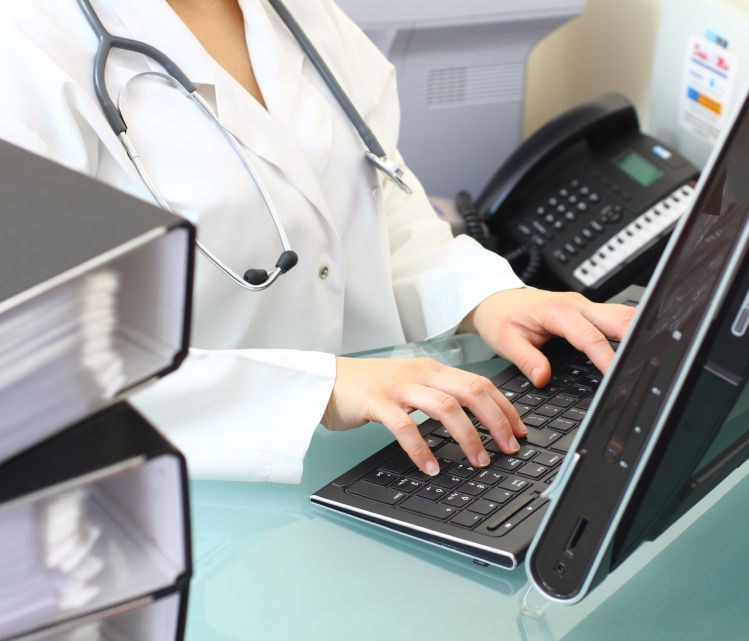 However, unlike simply pushing a couple of keys on the screen embedded in the dashboard of your car, the transition from paper to digital when it comes to electronic medical records (EMR) has been anything but smooth. The government-led transformation of healthcare information has become a taxing process for the healthcare industry.
According to the U.S. Department of Health and Human Services, office-based physicians using an EMR increased from 48 percent in 2009 to 78 percent last year. However, some medical practices are still using the old paper format.
One of the major solutions to increasing patient engagement is an EMR system. Doctors are aware of this and most are eager to go digital. The goal of an EMR system is to make the process of patient recordkeeping easier, more accurate, more comprehensive and more efficient. It helps enhance patient care and improve patient outcomes.
However, many doctors are not happy with their current system.
In an article appearing on
However, unlike simply pushing a couple of keys on the screen embedded in the dashboard of your car, the transition from paper to digital when it comes to electronic medical records (EMR) has been anything but smooth. The government-led transformation of healthcare information has become a taxing process for the healthcare industry.
According to the U.S. Department of Health and Human Services, office-based physicians using an EMR increased from 48 percent in 2009 to 78 percent last year. However, some medical practices are still using the old paper format.
One of the major solutions to increasing patient engagement is an EMR system. Doctors are aware of this and most are eager to go digital. The goal of an EMR system is to make the process of patient recordkeeping easier, more accurate, more comprehensive and more efficient. It helps enhance patient care and improve patient outcomes.
However, many doctors are not happy with their current system.
In an article appearing on 
 With the indoctrination of
 Medical records for more than 700 United States Olympians will be managed electronically for the first time ever at this year’s London Olympic Games.
This is in great contrast to how the U.S. Olympic Committee historically shipped electronic medical records in paper form on pallets around the world to where the athletes and doctors were at the time. Aside from being costly, paper medical records are much less efficient and provide a greater risk of destruction than EMRs.
The implementation of EMRs at the Olympic Games will mean a world of difference for the athletes and participating physicians. EMRs will enable quicker response time of treatment, a better understanding of an athlete’s medical history and performance, and easier management of individual treatment for members of a team.
Included in the collection of EMRs is an additional 3,000 records of images and other vital documents, including X-ray and ultrasound.
Tracking medical information electronically also enables health care providers to track and analyze data for further treatment. With real, reportable information, providers can analyze what treatments were more effective and custom-build programs for each individual athlete.
The success of EMRs isn’t exclusive to athletes.
Medical records for more than 700 United States Olympians will be managed electronically for the first time ever at this year’s London Olympic Games.
This is in great contrast to how the U.S. Olympic Committee historically shipped electronic medical records in paper form on pallets around the world to where the athletes and doctors were at the time. Aside from being costly, paper medical records are much less efficient and provide a greater risk of destruction than EMRs.
The implementation of EMRs at the Olympic Games will mean a world of difference for the athletes and participating physicians. EMRs will enable quicker response time of treatment, a better understanding of an athlete’s medical history and performance, and easier management of individual treatment for members of a team.
Included in the collection of EMRs is an additional 3,000 records of images and other vital documents, including X-ray and ultrasound.
Tracking medical information electronically also enables health care providers to track and analyze data for further treatment. With real, reportable information, providers can analyze what treatments were more effective and custom-build programs for each individual athlete.
The success of EMRs isn’t exclusive to athletes. 
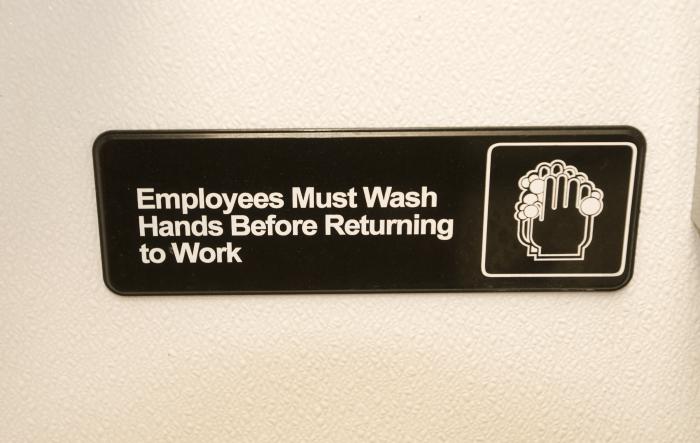 Touch technology similar to that used on the iPad is being mimicked to monitor hand hygiene compliance and cut down on healthcare-associated infections, or HAIs.
Safe Hands, the name of new hand sanitation-monitoring technology, is being developed by the same company that brought us talking urinal technology that warns against drunk driving. In this case, Healthquest Technologies Inc plans to create a system that measures the quality of provider cleanliness while tending to patients. The non-invasive system would monitor patient contamination in real time and would have the ability to detect the proximity of patient interaction and decide if sanitation is up to par.
The hand hygiene monitoring system is not currently available for commercial use, but is in development and testing.
Healthcare-associated infections are some of the most avoidable, most often overlooked infections. They are large risks for hospitals and have proven to be very costly to some organizations. According to the CDC, 1 out of every 20 hospitalized patients will contract an HAI. Awareness and prevention, much like with everything else, is key in making sure this doesn’t affect your practice.
Mobile solutions for hospitals and health care organizations will continue to change the way we operate. This is only one indicator of how comprehensive and crucial incorporating technology into your practice can be. Let MDnetSolutions help you in your mobile technology integration, whether with custom mobile applications for the iPhone or iPad or other mobile web solutions. Give us a call at 888-986-3638 or
Touch technology similar to that used on the iPad is being mimicked to monitor hand hygiene compliance and cut down on healthcare-associated infections, or HAIs.
Safe Hands, the name of new hand sanitation-monitoring technology, is being developed by the same company that brought us talking urinal technology that warns against drunk driving. In this case, Healthquest Technologies Inc plans to create a system that measures the quality of provider cleanliness while tending to patients. The non-invasive system would monitor patient contamination in real time and would have the ability to detect the proximity of patient interaction and decide if sanitation is up to par.
The hand hygiene monitoring system is not currently available for commercial use, but is in development and testing.
Healthcare-associated infections are some of the most avoidable, most often overlooked infections. They are large risks for hospitals and have proven to be very costly to some organizations. According to the CDC, 1 out of every 20 hospitalized patients will contract an HAI. Awareness and prevention, much like with everything else, is key in making sure this doesn’t affect your practice.
Mobile solutions for hospitals and health care organizations will continue to change the way we operate. This is only one indicator of how comprehensive and crucial incorporating technology into your practice can be. Let MDnetSolutions help you in your mobile technology integration, whether with custom mobile applications for the iPhone or iPad or other mobile web solutions. Give us a call at 888-986-3638 or