Topic: Marketing Effectiveness

EFS Marketing Effectiveness: campaigns that produce completed patient action.

5 Ways to Make Your Medical Website More User Friendly

It’s no secret that a user-friendly website will help you generate new business for your practice. But how do you make a user-friendly website? Here are 5 tips to making a user-friendly website for a medical practice.

How to Make A User-Friendly Medical Website?

Design for mobile first.

Most Internet browsing now takes place on mobile. Because of this, it is absolutely paramount to have a mobile-friendly website. However, in 2020, we can take it a step further: mobile FIRST. Since desktop makes up a smaller portion of website views, the design of the site needs to, first and foremost, be optimized for viewing on mobile phones.

This includes navigation menus, calls to action, image sizes, and layouts. Your website needs to look good on mobile, otherwise you miss out on a great deal of potential traffic.

Make your purpose clear and visible above the fold.

Above the fold is an old advertising term that used to refer to content on a newspaper that was above the fold line; however, that term is now used to refer to the content on your webpage that is immediately visible on the screen without scrolling.

You need to include who you are (logo), what you do (a main headline), and an action that most users will want to take (call to action button) above the fold. You should also have an easy navigation menu above the fold so that people can browse the rest of your site.

Keep your website fast.

Site speed is the number one reason why someone would exit your page. If it doesn’t load fast enough, users will simply go to another site that might be able to help them.

Keep image sizes small, make sure to keep on-page scripts to a minimum, and choose a dedicated server to host your website. Use Google’s PageSpeed insights to get personalized recommendations for your website.

Make your website easy to navigate.

A big reason people leave a website is because they couldn’t find what they were looking for. If you have the information on the medical website, but people can’t find it, it’s about as useful as not having the information there at all!

How do you make a website easy to navigate? First, have a menu that includes the most important options. Second, make your most important services accessible on the front page. Lastly, make sure that your sitemap is easily accessible by users. The site map is a last resort for people, and is mainly used for search engines.

Make sure calls to action are big and prominent.

On a website, calls to action are typically in the form of buttons. The button tells the user what to expect when they click, and the button is made large and easily visible so that their eye is drawn to it when they want to take an action.

Your button needs to be large enough to click on, but not so large that it takes up too much of the screen. However, that’s not enough. The button needs to also be prominent. The best way to make a prominent button is to use a color that stands out from the rest of your website. If your main website color is green, you’ll want to use orange buttons (for example). If your main website color is blue, red buttons will stand out the most. Stick to complementary colors for important calls to action!

The Big Medical Practice Website Checklist: Does Your Practice’s Website Have Everything?

Your medical practice’s website is one of the most important tools for your business. It can be used to relay information, keep patients updated, and even allow patients to schedule appointments with you directly online.

But not all medical practice websites have everything they need. In fact, a website that can’t do everything that the patients need could cause the practice to be overlooked entirely. So what do medical practice websites need in order to provide the best possible experience for patients, while helping your business grow? Here’s our checklist that you can follow.

Essential Elements for Medical Practice Websites

Patient Forms

Having downloadable and printable patient forms on your website is an excellent way to save you and your patients a great deal of time and hassle. It can also save you a fair bit of money and help make your operation a little bit more green.

News and Updates

If you’re not using your website (and your social media profiles!) to post updates about what’s going on at your practice, then you are using your website wrong. If there are any updates that could potentially affect patient care in any way, such as closures, reduced hours, new services, or new staff, it’s on you to update your community.

Contact Information

A website serves many purposes. Chief among them is passing on information that allows patients to contact you. You should have an actively managed email address, a phone number, a fax number, and your address on your website visible on the footer of every page.

Patient Resources

Is there anything you can provide to make your patients’ experience better or smoother? Can you provide information or resources for patients that need help? Your website is the perfect place to do that.

Services and Insurance

You need to make it clear on your website what services you offer. This way you can clear up a great deal of confusion about what you offer. Not to mention, you should also make sure that patients have a way to figure out whether or not your practice accepts their insurance.

Testimonials

People trust reviews more today than ever. Having testimonials on your website talking about how good of a job you did care for your patients, how good the overall experience was, and how much assistance the staff provided will make people feel a lot better about coming into your practice.

Read more: How to Use SWOT Analysis in Healthcare: Steps and Strategies

Maps

It’s not enough to provide your mailing address: you will want to include a map of where your practice is located in your area. Using a Google Maps plugin is an easy way to do this, as it makes it easy for people to get directions to your practice as well.

Social Media Integration

Your website and your social media profiles are intertwined, and the whole is greater than the sum of its parts. Making sure that your website and your social media are integrated will make it easy for you to update people on social media about new content or new happenings at your practice.

Blog

A blog is not just a way to update your patients, but it’s also a way to provide expert knowledge on subjects near and dear to your patients’ hearts. Your practice is in a unique position to provide excellent content that really helps your patients, and your website is a great way to do this.

HIPAA Compliance

Last but absolutely not least, your website absolutely needs to remain compliant with HIPAA regulations. If your patient scheduling form collects any sort of protected health information (PHI), then your site will need to make sure that the collecting of this information is compliant.

Does Your Medical Practice Website Have All The Above?

If your site doesn’t have everything, you better make sure to add it. Or, call us at Guideway Care, the healthcare marketing experts. We help medical practices like yours improve their digital presence, make it easier for patients to find and do business with you. Call us today!


Online Medical Marketing Strategies For Attracting Quality Patients

Online medical marketing sounds like it can be confusing. There’s SEO, there’s ads, there’s social media, and all of these things need to be combined to form a cohesive marketing strategy. That’s a lot of different tactics to consider!

But healthcare marketing is not about tactics, it’s about strategy. While tactics play a role, they’re not the end of the conversation. Do the first things first.

Figure out who you want to reach

The first thing all businesses need to do before they start marketing is figure out who they need to be marketing to. Marketing doesn’t work if it’s to the wrong people.

Can’t decide what kind of people who want to reach? Start with your services. What services do you currently offer, and what kind of people come in for those services? What are their problems? What are their demographics? Define these things, and you’ll have a good idea of who you should be reaching with your marketing.

Then take a look at your local market’s needs. Do research on your local market’s demographics, and take a look at their behavior.

For example, a bariatric surgeon may be looking for women aged 30-45 who are struggling with their weight and have not found success with diet and exercise. Figure these things out for your practice!

Decide what medical topics you want to speak about

Now that you know who you want to speak to, you need to figure out what you need to say. Medical topics that relate to your practice are the best topics to discuss, as they give prospective patients information that could lead them to book an appointment.

It’s not enough to have something to say: you have to have a reason to say it. Why should prospective clients listen to you?

Ultimately, you want to talk about issues near and dear to your target audience, while also providing interesting and highly informative content for them to read.

What kind of topics should you discuss? Whatever is highly relevant to your audience! Going back to our bariatric surgeon example, you may want to discuss things like the post-op diet that all patients have to go through, or how they should be preparing for surgery. Figure out what your market wants!

Read More: Ways to Promote Your Medical Practice

Test different digital online medical marketing tactics

There are many different medical marketing tactics. You will want to invest in many, or all, of them and see which ones are moving the needle the most. Search engine marketing, social media marketing, paid search, paid social, PR… all of these things should be tested. Invest small amounts of money and time into them, and see the results.

You’ll notice that not all of them bear fruit, but given enough time and tests, some of them should. Then, you’ll know what you’ll need to invest in further.

Last Words: Make Sure To Track The Results Of Your Marketing!

Many businesses, clinics included, fail to measure the true impact of their marketing. When you measure this, you’re not going to get a 100% accurate picture, but you will get a good idea of what’s working and what’s not. However, you can’t get this idea if you don’t collect the data and analyze it!

You should be collecting information about where your website traffic is coming from, what people are doing on your website, and how many people are requesting an appointment (either by phone or through your secure web form).

Changing Your Healthcare Marketing After Coronavirus

The COVID-19 pandemic has had a huge impact on the global economy. But the reverberations are most felt in the healthcare world. Focus on healthcare investment has shifted greatly toward dealing with the virus. Many healthcare businesses that weren’t directly involved with dealing with the virus have seen a drastic decrease in revenue.

If you’re thinking about reducing your marketing budget, we highly encourage you to think in different terms. Instead of just cutting back on your marketing budget, where else can you put that spend to work? What other strategies can you use to prepare for when businesses open up again? Here are our recommendations.

Why Now Is the Time to Prioritize Digital Marketing

If you haven’t already been putting digital marketing initiatives first, then now is the time to do it. Investing in digital marketing has always been a solid investment, but for the near term with everyone in quarantine, digital marketing has never been more important.

Invest in search engine optimization, where you’re producing content and optimizing your site and copy to be found by people on Google. Invest in social media marketing, where you post shareable content to social media and interact with your followers. You may even want to invest in paid search and paid social.

Best of all, starting now will also have some ripple effects in the long term. Your search engine rankings will increase, your social media following will grow, and you’ll have much more data if you’re investing in advertising. Why? Because digital investments are a long term play, especially with SEO and SMM.

Build Authority and Stay Connected During Lockdown

Now that everything is under lockdown, your business can use this time to create content and make your brand an authority in your space by producing helpful, interesting content that’s better than anything else out there.

Write content. Create videos. Do live workshops and webinars. But that’s not all.

After you do all of these, use the opportunity to get people’s info and stay connected. Talk directly to your prospects, and use email marketing to keep in touch with them after the shutdown’s end. By doing this, you’ll have access to them when they’re much more prepared to buy.

Read more: Healthcare Email Marketing: Why it’s Powerful and Popular 

You can even use this opportunity to give back to your community. Let your local Chamber of Commerce or Board of Trade know that you’ll be giving workshops on important health topics, and they may be able to help get the word out in your community.

Prepare Now to Thrive in a Post-Lockdown World

It’s tough if your business’s financial situation isn’t all that great. But the lockdowns will end, and people will be back to normal. If you’re able to invest the time and effort into crafting strategies for the post-shutdown world, you’ll be able to thrive even greater than before.

Stay safe, and be prepared for when businesses open again!


The Five Keys to Effective Hospital Marketing Strategies in 2020

Have you been brainstorming hospital marketing strategies, but couldn’t come up with any novel ideas to support your current initiatives?

You’re not alone. Most hospitals in the US stick to the tried-and-true marketing tactics that they always have. They’ve recently added digital to the mix: much later than most businesses. Why? Because it takes time and effort which is often spent taking care of the hospital’s immediate needs.

There are, however, ways that you can come up with good hospital marketing strategies that work for you. Here are the keys to doing so.

Satisfy the needs of your local market.

Every market has different needs, and your market is no different.

You already have much of the data needed to satisfy your local market’s needs. Data such as the median age of the population, ethnic backgrounds, patterns in patient behavior, all of these will help you understand what the unmet needs are.

For example, if your area has a high proportion of Medicare enrollees, you may want to invest in services that a geriatric population will benefit from (that a younger population might not). Or, as another example, you may find that your local area’s Chinese population is growing. You might want to invest in more Chinese-language services and marketing materials in order to communicate with them.

Only you can truly understand what your local market needs out of a hospital and their messaging.

Create high quality interesting content.

Good content wins on the Internet. There’s so much content out there, especially medical content, and in order to stand out, the content that you decide to promote and produce needs to be better than what’s currently out there.

This means satisfying a need that isn’t currently met, giving information that isn’t expressed, or simply giving them a friendlier, more familiar person to listen to.

Your content, though, is NOT the time to toot your hospital’s horn. However, it is perfect for conveying information in a way that’s relevant to the people in your market, giving you an edge on the competition.

Reach out to your patients.

You have patient data (not derived from medical records) that you can use to market to them. Now, that doesn’t mean being annoying and spammy: there are rules against that.

What you need to do is make sure your patients know when they need to come in for follow ups, annual checkups, and give them whatever information they need in order to get the most out of the care you’ve given.

You can also use this opportunity to get feedback. Ask your patients how their experience was, and get them to answer questions that could help improve your hospital’s operations.

Leverage the true power of social media.

Why would a person follow a hospital on social media? There are many reasons. One reason is to stay up to date with information regarding the hospital’s openings, closings, and events. Another reason is to get important health information relevant to your local market.

A big reason, though, is to get information that is relevant specifically to them from people they trust. They’d rather hear information from a physician they can meet and speak to, especially if it’s going to be their physician. Local authorities build trust first by being local, and then by being an authority.

Remember, though, when using social media, you will need to remain HIPAA compliant and make sure that no PHI is being transmitted in any way on a social media platform!

Measure everything.

It’s not good enough to be everywhere. You need to put effort in making sure that every initiative your hospital takes part in is measured.

How should you measure the effects of content strategy and social media marketing? Blog viewership, social media following, and related upticks in hospital performance metrics.

By measuring your initiatives, you can figure out what’s working and needs more investment, and what isn’t working and should be pruned back.

The Biggest Challenges in Marketing in the Healthcare Industry

Marketing in the healthcare industry is unlike any other industry in the world. The healthcare industry is high-stakes, heavily regulated, and woefully misunderstood by patients.

Between staying within the law, and effectively building a connection between your business and your patients, healthcare marketing presents unique challenges not seen in other businesses. So what are they, and how should we deal with them?


Marketing Challenges In Healthcare

Dealing with HIPAA Compliance

You knew this was coming. HIPAA compliance is a monkey on the back of every healthcare practice looking to use new marketing methods or technology. As a result, it’s the most important challenge in healthcare marketing.

Certain forms of marketing are illegal, such as remarketing to prospects based on known health conditions, and that’s just the tip of the iceberg. So what do we do?


Solution: Be Diligent In Following It!

Make sure to keep claims and language within the bounds of the law. There are claims that you can and cannot make.

Most importantly, make sure your staff (and especially your marketing team) understands the HIPAA Privacy Rule. It defines what is and isn’t marketing, and what falls under the bounds of the rules.


Your Budget

Hospitals and practices require great amounts of resources. Since they also provide an essential service, patient acquisition is often thought of as an “if we build it, they will come” situation. These two factors result in small marketing budgets.


Solution: Convince Leadership Of The Value

Sell your leadership or partners on increasing marketing budget by showing how marketing can provide a measurable ROI. Marketing is not a cost center but a driver of revenue, and it’s important that leadership understands that this applies to healthcare businesses as well.

By communicating that you’re able to work with HIPAA regulations to stay above board, you’ll also convince them that investing in healthcare marketing is a sound strategy.

It’s best to work with a marketing partner that understands HIPAA and the intricacies of healthcare marketing. We at Guideway Care provide healthcare marketing systems to businesses of all sizes.


Public Perception of Healthcare

Not only do most people not understand the healthcare industry, but many people actively dislike it. Healthcare is expensive in the USA and has become highly politicized. So what can you do to put your business in the best light considering the perception

Solution: Become An Authority

Create excellent content and use content marketing strategies to promote your practice and its offerings. People like to make the choice themselves, and instead of presenting them with offers straight away, give them the information they need to make a decision themselves. This also improves your business’s reputation as an authority on your healthcare specialty.

Transparency In Operations

People who are in need of healthcare services are not able to see what happens behind the curtain. As a result, they rely on reviews and information online to find out important information.

Solution: Keep People In The Loop.

Make what you do more transparent. Make it easy to see what your operating hours are, the services you provide, and how the process goes.

Also, improve the overall patient intake experience, from before the appointment is set up all the way to the moment they start the appointment. Making it easy for them to book online or by phone will definitely improve your healthcare marketing efforts, as they’ll be more likely to report a positive experience.

Making the Connection

How do you market to your customers, even considering all the HIPAA regulations? Making a connection with your customers is still very difficult, even with all the technology out there. What do you do?

Solution: Make It Easy For Them.

Be where your patients are. HIPAA regulations concerning marketing mainly deal with marketing messaging and segmentation, rather than placements.

Make it easy for your patients to find you on social media, on search engines, and in local publications by being active on them. Then, collect relevant data to figure out which of these is best serving your marketing goals.

Building Trust

Trust is at an all time low, and it seems to keep getting lower. Misinformation is abundant, and many people are starting to get more savvy to the techniques that marketers are using to mislead customers to get them to buy. Thanks to the poor reputation of the healthcare industry as a whole, this is a difficult (but not insurmountable) challenge to overcome.

Solution: Engage with transparency.

Be as transparent as possible, and showcase honest reviews. Make it easy for patients to access information about pricing, wait times, and services offered.

Also, being engaged within the community on social media and in real life is important for building trust. Your patients are just as human as your staff are, and making that human connection is the key to building and maintaining trust.


10 Topmost Healthcare Marketing Tips In 2020

Marketing for healthcare continuously changes. It’s challenging to identify healthcare marketing trends and determine which strategies to use to reach prospective patients. Healthcare establishments will get the best results by planning and fine-tuning their marketing strategy with the help of a few trending marketing tips.

What is Healthcare Marketing?

A process of strategically reaching out to healthcare audiences via messages and experiences to attract patients, develop strong relationships, and keep users engaged with your business.

Planning Your Healthcare Marketing Strategies

Every healthcare establishment should have a plan in place to keep up with trends in the industry to remain competitive. Crafting the right messaging in tune with those trends will allow your business to engage with your target audience at the right time.

Fine-tune your healthcare marketing strategy

Here are ten tips for fine-tuning your healthcare marketing strategy in 2020.

  • Consistent branding

The brand messaging of your healthcare business should remain intact when implementing a marketing campaign across a variety of channels.

  • Evaluate the online patient experience

Patients want to find the information they are looking for on your website quickly, view it clearly, and find it useful. You want patients to be able to interact with your medical site to be involved in their healthcare.

  • Build a responsive website

A responsive website will display beautifully on any device regardless of the screen size. 40% of people will stop engaging with a website if the content or layout is difficult to navigate, graphics are unattractive, or the site doesn’t load properly.

  • Create great content

The content draws visitors and search engines to your site. Regularly producing the best healthcare marketing content for your website that is valuable, consistent, and patient-focused will establish your healthcare business as a trusted authority in your field.

  • Test site speeds

40% of users will abandon a website that takes more than 3 to 5 seconds to load. Periodically test the site speed to be sure you are capturing all users.

  • Build a mobile responsive website

48% of people view websites and posts on their mobile phone or tablet. You want to be sure your site can be seen on any size screen to engage all viewers on your website.

  • Optimize for the search engines

80% of consumers do their product and service research online. However, less than 10% of search engine users move on to the second page of search results. If your healthcare website doesn’t rank on the first page of results, consumers will not find you.

  • Utilize PPC and display ads for Healthcare marketing

Pay-per-click advertising and display ads can help a healthcare clinic or practice increase brand awareness and move your website up in rank on search engines in a relatively short time.

  • Use video marketing

Most healthcare marketers are using healthcare videos to connect with existing and potential clients, engage with them, and convert them into regular clients. Videos are being used to introduce the healthcare business and staff, inform patients about services, processes, and health conditions.

  • Implement social media strategy

Marketing on social media platforms such as Facebook, LinkedIn, and Twitter is an opportunity for your healthcare establishment to reach a broad audience with your products, services, and message and stay connected to existing clients

Using these tips to plan and fine-tune your healthcare business’s marketing strategy should reward you with an increase in prospective patients, website traffic, and loyalty among existing healthcare clients.

How To Create A Medical Website That Enhances The Patient Experience

Well-designed Medical websites can make a big difference in elevating your medical business brand, generating more revenue, and improving the patient or prospective patient experience. Your medical website design can benefit from the following design tips.

1. Design Should Target Your Intended Audience

Health and wellness websites should target consumers seeking information and services about the specific services provided by the healthcare or wellness provider. A general practice medical doctor offers different services to different types of patients than a cardiovascular doctor. The design of the website should cater to the target audience you seek to attract.

2. Keep it Simple, clear and well-structured

Design your website so visitors can see what your business is all about and what services you offer when they enter your website.  Too many pages, menus, and too much content or graphics can cause the visitor to get lost and confused on your website. Keep medical website designs simple, well organized, professional, and eye-catching.

3. Highlight Key Information

The information that you most want your patients and prospective patients to know about your medical practice or clinic should be the first thing that catches the eye of the viewer. The entire website should be designed to highlight that essential information.

4. Create a Mobile Responsive Design

A mobile responsive website can determine if someone is viewing the site from a smartphone, and will show the mobile version of the website. If a user finds your website on their smartphone, they can push a button to automatically dial the medical practice, making it very easy for the user to contact you.

5. Incorporate Appealing Visual Content

Visual content captures the visitor’s attention first. Visual content is not limited to graphics. Website designs can utilize photos, slideshows, and videos to enhance your medical brand or provide information. Be sure that the visual content you incorporate in your design does not impair page load time. Stay away from designs that rely on Flash, as many devices do not support that technology.

6. Make it Search Engine Friendly

Search engines recognize coding elements within a website that identify what the purpose of your website is. Your design should incorporate HTML coding tags and headers to identify your medical business and help your website rank in the top pages of search engine results.

7. Consider User Experience

When a consumer visits your website, they want to quickly determine what your business does, find answers to specific questions, and become more knowledgeable about their healthcare. Health websites need to provide engaging, high-quality, relevant content in a variety of modes that will allow users to engage with the business and be more involved in their healthcare.

8. Follow HIPAA Compliance

Whenever patient’s communicate with a medical business via their website, HIPPA regulations for privacy and security must be followed. Designers are held to a higher standard for medical websites.

Medical websites that are well structured, mobile responsive, HIPAA compliant, and patient-focused will meet the needs of patients as well as the medical office or practice. The site will become a go-to tool for staff and patients alike. 

Why Healthcare Videos Can Help Businesses Grow

Video is a highly important aspect of online business and has been for the better part of a decade. In 2018, viewers were spending almost 7 hours per week watching online video, and that number goes up as the viewers get younger.

To capture the attention of all generations, and to be able to convey your message in a more effective way, your healthcare business needs to start using video as soon as possible.

Excuses For Not Using Healthcare Videos

  1. It’s too expensive. Although online video can be expensive, it does not need to be. More and more, people are consuming content made with no editing filmed on smartphones. This can be done by any business!
  2. It’s hard to track. This is absolutely false, as Youtube, Google Analytics, Facebook, and Instagram all allow you to track metrics. It’s up to you to correlate them to business objectives.

Why Should Healthcare Businesses Use Video?

  1. Videos make excellent testimonials, which help build trust in your brand and authority in your niche. People trust what they can see, and they are more drawn to people who are talking to them directly on video. Best of all, if you can use these videos to show results, it makes for a powerful marketing tool with strong social proof.
  2. Healthcare videos can be used to educate and inform patients about their health conditions. Patients want to learn about their conditions in order to understand what they’re dealing with and ease the anxieties they may have about living with or treating their conditions. This also shows that you know what you’re talking about, building trust among your viewers.
  3. Social media is video-friendly. Facebook and Instagram prioritize videos in their algorithms, allowing you to reach greater numbers of people with a video post.

Tips for Effective Healthcare Videos

  1. Focus on what your patients care about. When posting a video about a certain condition, you’ll want to use the video to ease their anxieties while also giving them the most important information they need.
  2. Optimize for mobile devices. The majority of video views are done on mobile devices, and vertical video is becoming more and more common. 
  3. Keep in mind the platform when you’re uploading videos. Snapchat and Instagram Stories are meant specifically for vertical video, whereas Youtube and your website are more for traditional horizontal videos.

Healthcare Search Marketing Solutions & Trends for 2020

Healthcare marketing has changed a lot over the past decade. Now we’re entering a new decade, and it’s an exciting time for healthcare businesses doing Internet marketing!

By taking advantage of the following healthcare marketing trends for 2020, your business can grow with the times without being left in the dust. Check them out!

Changes in SEO for Healthcare Marketing

Search engine optimization, or SEO, changes more rapidly every year. As Google’s big brain aims to assist users by giving them the most relevant results, typical SEO techniques have been largely overtaken by a focus on the user experience.

A few things to note for 2020:

Content is King

People have been saying “content is king” for years now. However, it’s never been more true than it is now. When considering the user search experience, Google wants users to find exactly what they’re looking for when they’re searching on their platform. They promote content that is high quality and decisive, giving the user exactly what they want.

When creating content for healthcare marketing, keep keywords in mind. These keywords will expose what people actually want to know when they search for that term. As always, aim for the long tail, and give people the content they want. Authoritative, correct, and informational. But never forget your business’s main objective!

Healthcare search marketing content should revolve around answering the questions patients and clients actually want to know. They want to learn about their relevant health conditions, or how your products and services will help them. Answer these questions informatively and with authority.

Infographics: Rank for Image Search

Infographics have spread in the late 2010s, and their use isn’t going away. People want content that is condensed, easy to understand, and quick to digest. Infographics fit this bill exactly.

Best of all, infographics often end up prioritized in Image Search because of how many people click on them.

Use them to make excellent content even easier to digest. For example, if you want to talk about the benefits of a medical device or service, you can include many different statistics and charts to show how it helps people treat their conditions or solve their problems.

Video: Not Just Youtube

People watch more video content every year. Video content has become the focus on many social media platforms like Facebook, Instagram, and even LinkedIn. Videos have become prioritized on those social networks, and people share more and more video every day!

By producing high quality video content, you can more effectively spread your message in a condensed form that keeps the user’s attention. But video quality is not just about how good the camera or studio is: in fact, vertical video shot with smartphones have become commonplace even for businesses and personality brands!

For your healthcare business, people respond to personal authorities on video. Having someone who acts as an ‘influencer’ for your business, while having the authority to speak on advanced healthcare topics, could be your saving grace for a good video campaign.

Most of all, remember how your content strategy fits into your business’s objective. Use your content, including videos and infographics, to help bring people into your funnel and segment your potential prospects.

5 Simple SEO Tips for Healthcare Businesses

Wondering why your healthcare business doesn’t rank all that well on Google? It’s because your website isn’t optimized for it!

SEO, or search engine optimization, has been a buzzword in the industry for years. But it’s important, and we’re going to show you how to do healthcare SEO yourself; simple, effective, and actionable tips.

Know Your Keywords

You own a healthcare business, so surely you already know what people are searching for, right? Unfortunately, many people get this step so wrong, and after doing all sorts of healthcare SEO, they still don’t get any more traffic!

To do this simply and effectively, come up with a list of services you offer. Then write down the benefits of these services. These are your keyword starters… but they won’t be what you optimize for.

Then, open up Google’s Keyword Planner and enter these phrases into the tool. You’ll be presented with a list of keywords, ordered by the amount of traffic available per month.

Look for long-tail keywords (keywords looking for something specific, usually more than 2 words in length) with significant volume, at least 200 monthly searches. Keep a list of these.

Get Your Meta Tags Straight

Those keywords you’ve come up with should be in your meta tags. You can see them between the head tags in the HTML of your site.

There are many types of metadata, but the two primary ones are the title tag and the meta description. The title tag should contain the topic of the page and should have your focus keyword for that page. The meta description should describe what’s on the page, in a sentence, containing the top few keywords you want for that page.

Focus On Your Local Area

Healthcare SEO is centered around local SEO. Local SEO focuses on people who are looking for a business in their local area, and is a goldmine for highly targeted traffic!

You need to create a Google My Business listing, if you are a local business with an address you want people to visit or a phone number you want people to call. Associate that My Business listing with your website and that business will pop up on Maps and in the main search results when people search for you (and sometimes when people search for your focus keywords!)

Post Excellent, Original Content

Google prioritizes good content over poorly-written or spun content, based on several complicated and secret factors. All in all, though, your content needs to provide great value to the reader, while also being original.

Remember that keyword planner tool we were talking about in the first step? Now we want to create content around these keywords. Choose a few of them and write articles about these topics, focusing on optimizing for a long tail. This is how you not only rank, but get quality traffic from Google!

Leverage Other Types of Media

It’s not just websites people search for. They’re also searching for images, videos, news, places, and more!

By making sure your images and videos have the appropriate keywords and metadata on them, you can help your website show up in search. People may click the video and image and go to your site from there, opening up an avenue for high-quality traffic!

3 Easy Tips to Start Healthcare Advertising on Facebook

Facebook is one of the biggest online advertising channels around, with billions spent on ads every year. Businesses now treat Facebook as a primary part of their marketing mix, and healthcare advertising is no different.

Healthcare companies do a fair bit of advertising on Facebook. From private practices to medtech, healthcare advertising on Facebook has become an even greater part of the overall strategy. But how do you do it properly? Here’s how.

Tip #1: Start With Your Primary Objective

Why do you want to advertise on Facebook? Well, to grow revenue, of course! But Facebook has some very powerful tools to help businesses get exactly the kind of business they want.

Do you want product sales or patient visits? Do you want scheduled appointments or phone leads? Depending on what your business needs, you will advertise slightly differently.

In Facebook Ads Manager, you have the option to select your objective. This is important because Facebook will optimize ad delivery to get you more of your desired result for less.

Choosing the right objective will mean the difference between a dead campaign and a winning one.

Some objectives will require that you have a functioning Facebook Pixel on your site, too, so make sure that’s set up properly by going to Events Manager and testing your pixel!

Tip #2: Get Your Audience Right

The most important rule of marketing is to know your target market! Facebook is a wonderful platform because it allows you to laser-target your desired customer: down to age, gender, location, interests, and even behaviors! You can even target people who are on your mailing list or have taken an action on your website using Custom Audiences!

To get the proper audience, start with a customer avatar. Your customer avatar is a description of your perfect prospect, the person who would get the most value out of your services. This is especially important in healthcare advertising!

Use the Audience Insights tool to turn your customer avatar into a targeted audience for your ad sets!

Tip #3: Test Lots of Creative

Creative, or the visual & copy elements of your ad, is the first thing that your audience sees. It’s your first impression. Make it count.

But how do you make good creative? You need to test lots of it. Figure out 3-5 possible appeals that your audience will respond to. Then choose 3-5 different images or video elements that are both eye-catching and relatable to your offer. Now you have between 9 and 25 different ads to test.

Testing them all will take different amounts of time depending on your budget. But this money spent is well worth it!

Video Marketing is Changing The Future Of Healthcare

Video marketing is one of the hottest trends in marketing right now.

Most healthcare marketers are using healthcare video to connect with existing and potential clients, engage with them, and convert them into regular clients. It is useful because medical video production has become more affordable and medical videos online resonate with potential patients.

Three Reasons Healthcare Video Production Succeeds in Marketing

  1. Most people are visual learners. Ninety percent of the information that our brain processes is visual.
  2. Videos humanize organizations. Video can convey emotions that are not possible with text content. They make a connection with people. Personal connections will likely lead to action, and action will lead to conversions.
  3. Video content differentiates one healthcare organization from another. It is difficult for a healthcare company or practice to stand out on the Internet with written content alone. The combination of real-time visuals and informative content draws people and search engines to your website and presents the unique services your healthcare concern offers.

How Can Video Marketing Be Used to Educate and Attract Patients?

Testimonials

There is no better spokesperson for your practice than a satisfied patient.  Video testimonials are mostly interviews with patients that highlight their personal experience with a medical condition treated by your healthcare practice. A well-made video puts a personal, empathetic face on a patient’s healthcare success story and empowers satisfied patients to share their stories in their own words. Testimonials create a much more powerful message for both marketing and conversion purposes. 

Website Welcome Videos

Welcome videos introduce people to a hospital, clinic, office, or healthcare system and inform them about the services that are provided. It is much more cost-effective than a salaried employee repetitively providing an overview of your business.

Physician Profile Videos

Trust is the bedrock of any medical practice. People want to know that they can trust their physician with their healthcare. Creating video physician profiles on your practice’s website introduces people to your physicians in a non-threatening way. It makes it easier to for a patient to get comfortable with your practice and schedule an appointment.

Procedure and Condition Information Videos

Educational videos are an excellent way of providing an overview of a specific process or health condition to a patient. These videos are usually simple, informative, and easy to follow. They are an essential method of establishing your healthcare practice as a trusted source of healthcare information.

Marketing Your Healthcare Videos

Well made videos have been known to go viral on social media sites. They are a powerful marketing tool to introduce your healthcare practice to a large number of potential patients.

Online video content is becoming a critical means for people to obtain healthcare information, evaluate a medical provider, and make informed decisions about their health needs.

Video Marketing is an essential tool for healthcare because it differentiates providers, builds meaningful relationships with end- user audiences, and results in conversions. Engage and connect with your viewers, and they will not only increase your reach by sharing your video with others, but also spend more quality time on your website.

The Ultimate Guide To Healthcare SEO

Healthcare marketing consists of a lot of moving components, but none as important as medical seo or “search engine optimization.” Search engines are the gatekeepers to online traffic, and the name of the game in healthcare seo services is to get the search engine to rank your website on the first page of results in response to a user’s query.

Healthcare SEO is a long-term strategy to improve the rankings of your healthcare practice website involving three techniques.

Rules and Methods for Healthcare SEO

1. On-Site SEO Techniques

The method in which your healthcare website is set up for code, images, and the written content has a marked effect on how easily search engines can find your practice.

Visible sitemap: Just like you need a map to find your way to a location not known to you, search engines need a sitemap of URLs or a menu to find your practice.

The Functionality of your website:  Most consumers don’t have the patience to sit and wait for a web page to load or spend time on a site that can’t be viewed very well on their mobile phone. Google takes into account the Page Loading Speed and Mobile Responsiveness in it’s ranking of your website.

Tags: Search engines crawl the Internet and are drawn to coding elements within a website that identify what the purpose of your website is. Tags are HTML coding that specifies the title of your web pages, brief descriptions of the content, keywords that identify your business, and alt tags that highlight the relevancy of images on your site.

Headers and Footers: H1 and H2 headers  (titles and subtitles) within the content of your web page and Footers at the bottom of your page further identify the purpose of your website.  

Links: Clickable hyperlinks embedded within the content of your web page also draw search engines to your site.

Content: Content is the vehicle that draws visitors and search engines to your site. Make sure you are posting regular content to your website that is up to date, relevant, and customer-centric.

2. Off-Site SEO Techniques

One of the most effective off-site medical seo techniques is the use of backlinks. Backlinks are links from authoritative, credible websites or directories within your field that point to your site. A referral to your healthcare website from your best friend Bob’s auto garage is not as valuable as a referral from the Mayo Clinic.

How do you get Backlinks?

  • Put out a press release announcing the introduction of your practice or a new service.
  • Get listed in a medical or local area online directories. Many insurance companies provide online directories of physicians nationwide that accept their insurance.
  • Write an informative Blog Article or a Social Media post regularly.
  • Actively manage online negative and positive reviews of your practice.

3. Local SEO Off-Site Techniques

Google and other search engines scour your website for keywords and phrases that indicate where your business is located to rank your website in the search returns for local areas.  Most consumers looking for an allergist want an allergist that is near their location. They may search using phrases such as: 

  • “Allergists near me.”
  • “Allergists in Atlanta, GA.”
  • “Allergists near Marietta Town Center”

Makes sure that your healthcare practice ‘s name, address, and phone number frequently appear throughout your website and are accurate in directory listings.

Effective Healthcare advertising involves a healthcare seo strategy that optimizes your website through numerous strategies to advance your site up in the search engine results to top-of-page.

5 Ways to Get Your Own “Best Healthcare Website”

We are frequently approached by hospitals and clinics that want to know how they can have the “best healthcare Website” or how their Website currently compares on a national, regional or local level to top healthcare Websites. Although we can use tools that deliver quantifiable answers for the latter—including Google Analytics and Alexa—they aren’t as useful for answering the former. Do a Google search for “best healthcare Website” and you will see hundreds of results for blogs, awards and other pages. Although many provide solid references for what a “best healthcare Website” might look like, they usually don’t give you the guidance to get your Website into the same class. Having a slick-looking, modern Website is always nice, but there’s much more to having a top medical Website. For example, the ever-popular Mayo Clinic’s Website might be regularly rank high on many “best healthcare Website” lists, but it doesn’t mean your hospital or clinic should make a duplicate version. Instead, you need a Website that not only looks great, but is great because it performs and functions for specific reasons. Here’s an easy and remarkably practical method for getting your Website onto a path that will at least improve its appearance and performance—and perhaps someday land you on somebody’s “best healthcare Website” list. The process borrows from the “five W’s” problem-solving technique ideal for becoming more aware of your Website’s strengths and weaknesses.

Who is Your Audience?

Your immediate response might be, “Well, duh, our patients!” But seriously, think about it: How well do you understand the background of your audience—which, yes, are your patients? This includes a matrix of:

• Age

• Gender

• Culture

• Income

• Insurance and payment mixes

• Geography and proximity

• Medical priorities and needs

With those points, you should develop some abstract profiles of your audience. Now visit your Website and take an honest look at all  of it—photos, content, function, etc. How well does your Website look or feel relates to who your patients actually are or what they want from you? Takeaway: If your Website doesn’t reflect the makeup and needs of its audience, you will want to consider updating your content to be more representative.

What Does Your Website Need to Be or Do?

Now that you’ve thought about who your audience is, take it one step further: What do they need from it? This may include:

• Appointment scheduling

• Patient portals

• Physician and specialty searches

Or conversely, think about your Website and what your audience doesn’t need from it? This includes:

• Slow loading times

• Outdated or obsolete plugins

• Unresponsive design/no mobile version

Takeaway: If your Website’s technologies are not delivering the performance and convenience your patients expect, you’ll want to think upgrading or replacing your Website’s architecture or platform.

Where are Viewers Finding or Using Your Website?

If you regular follow this blog, you’ll already know the tremendous importance having a mobile-friendly healthcare Website. This is related to a simple fact: a majority of healthcare Website visitors visit on their mobile devices. Google’s recent mobile-first update (which uses the mobile version of a Website to determine keyword rankings for searches) has reinforced this concept and is already causing massive shifts in search engine result pages (SERPs). Takeaway: If you aren’t looking at your Website metrics at least once a month, you should immediately make it part of your routine. The more engaged you are with your metrics, the more inclined you’ll be to improve your Website. Even if you don’t have a strong healthcare SEO strategy, you still should be using Google Analytics to look at your healthcare Website metrics to learn as much as you can about your patient’s online visiting habits, routines and more.

Why Do You Have a Website?

This should actually be the first question in this list because it’s also the most important. Give it a moment and think: What’s the point of having a Website for your hospital or clinic? You will likely be flooded with numerous reasons why you have a Website, and most reasons will probably relate to the first question about “Who is your audience?” This is because the most important reason you have a Website is to improve patient experience—which in turn leads to more appointments, surgeries, etc., as well as better outcomes. It at that point you must ask yourself: If you can define crucial reasons for why you have a Website, what are you doing to ensure your Website fulfills those reasons? Takeaway: If your Website isn’t living up to its expectations, it’s time to revisit your marketing plan, pinpoint its objectives, and then start developing a strategy to improve your Website. You will likely discover you either have the internal resources or you don’t—in which case, you will want to find a proven medical Website design and development partner to help you in your quest towards having a “best healthcare Website”!
As Guideway Care Website development leader, Tonni Islam is one of our most reliable subject matter experts. Guideway Care is a cloud-based technology and services company that improves profitability and patient outcomes for hospitals and practices through end-to-end patient engagement solutions backed by clinical and non-clinical teams. Its HIPAA-compliant, SaaS platform improves care team workflows, automates patient communication and tracks patient progress to optimize the patient journey. Since 2004, leading healthcare providers have trusted Guideway Care  to help acquire, manage and engage patients through complex episodes of care.

It’s Not Too Late: Google Speed Test Your Healthcare Website NOW

Will You Be Ready for the “Google Speed Update” and Its Massive Impact on Your Healthcare SEO Rankings?

Google’s long-awaited mobile-first indexing finally began taking effect recently in full force, and we’re guessing you’ve seen the initial shockwaves for volatile healthcare keyword rankings. We hope you were well-prepared for it and am coming out unscatched.

Now the newest trepidation among my colleagues in the SEO blogosphere is with Google’s next anticipated SEO game-changer: the so-called “Google speed update.”

As with most big Google SEO shifts on the horizon, there’s always the “what we are certain about” and “what we think will happen.” For the Google speed update:

• We are certain it will take effect in July 2018 and only impact some Websites.

• We think it will soon after become a major ranking factor for all Websites (and will really hurt those that still haven’t recovered or adjusted from mobile-first indexing).

For those reasons, we’ve been updating our healthcare SEO clients’ websites programming based on the results of the Google mobile speed test to ensure their page speeds are up to spec.

It’s also why we’ve been receiving many questions about the Google speed update. Here are just a few!

What Exactly is the “Google Speed Update?”

Ever since 2010, desktop site speed has been what Google calls an important “signal” in its keyword ranking algorithm.1 The reason has always been simple: Google prioritizes positive user experiences, and faster sites contribute to that.

The upcoming “Google speed update” increases the importance of that signal—but puts the focus squarely mobile page speed.

Who Will the “Google Speed Update” Affect?

When the Google speed update was first mentioned on its Webmaster Central Blog2 in January 2018, they explained:

“The ‘Speed Update,’ as we’re calling it, will only affect pages that deliver the slowest experience to users and will only affect a small percentage of queries. It applies the same standard to all pages, regardless of the technology used to build the page. The intent of the search query is still a very strong signal, so a slow page may still rank highly if it has great, relevant content.”

Put another way: When the Google speed update rolls out in July and you notice some unusual drops in your rankings, you will probably want to first look at your mobile page speed. Chances are you have “pages that deliver the slowest experience” and Google is penalizing you for it.

How Do I Perform Google Speed Tests?

Google provides a free mobile speed and performance test that quickly gives you a comprehensive understanding of what you might expect from your mobile healthcare Website after the update is launched.

Just enter your Website address, and in about a minute, Google will tell you your:

• Loading time on a 3G network (and estimated visitor loss rates)

• Comparison to top-performing Websites in your industry (which should hopefully identify yours as “Health”)

It will also provide you with a free detailed report of fixes to speed up your mobile site.

Google also recommends some other tools that we also think are useful for improving your overall healthcare website performance. These include:

• Chrome User Experience Report: Use this to get metrics for how real-world Chrome users experience your Website.

• Lighthouse: An open-source, automated tool for improving the quality of your Web pages.

• PageSpeed Insights: This analyzes the content of your Web pages and then generates suggestions to make that page faster.


We will continue to monitor this topic in the coming months!


As Guideway Care Director of Digital Marketing, Susan Gullion is one of our most knowledgeable resources for enhancing our healthcare clients’ search engine marketing strategies with SEO, PPC and social media.

Guideway Care is a cloud-based technology and services company that improves profitability and patient outcomes for hospitals and practices through end-to-end patient engagement solutions backed by clinical and non-clinical teams. Its HIPAA-compliant, SaaS platform improves care team workflows, automates patient communication and tracks patient progress to optimize the patient journey. Since 2004, leading healthcare providers have trusted Guideway Care to help acquire, manage and engage patients through complex episodes of care.

1 Using Site Speed in Web Search Ranking
2 Using Page Speed in Mobile Search Ranking


Bariatric Medical Practice Marketing Rule #2: Make It Easy for Patients to Find You

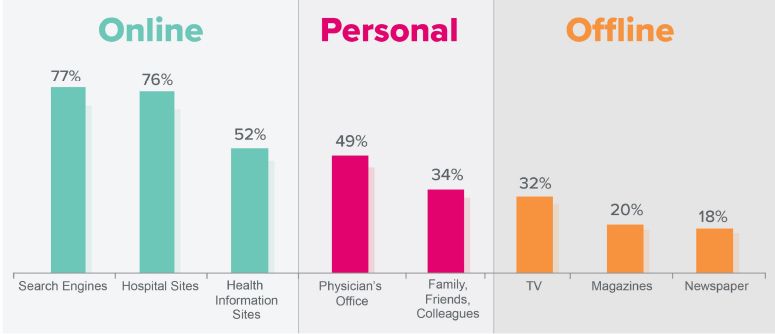
We kicked off this blog series with a discussion the first rule for growing your bariatric medical practice: the importance of “knowing your numbers.” This time, we will explore our next rule: make it easy for your patients to find you and begin their journey. Let’s begin with understanding how and where patients are finding healthcare services. It should come as no surprise that patients use online searches more than anything else—which includes personal referrals from physicians, family, friends and colleagues, as well as offline influencers like TV, magazines and newspapers.
Chart
Click to view larger.
We know this from a well-known Google study1 published this a few years ago that also showed how:

• More than 85% of patients began their searches online for health-related topics

• 48% of patients took more than two weeks to research before booking appointments

• 61% visited two or more hospitals sites before “converting” (more on this in a moment)

Find Yourself: Are You Experienced?

When we’ve asked bariatric healthcare marketers if they’ve ever tried to find their own hospital or clinic online—the same experience a potential patient would have—the answer is often no. We are driving home an important point, not pointing fingers: If it’s not easy to find yourself online, imagine what it must be like for patients that aren’t even aware of you, especially in competitive markets! With so much at stake with patients being able to find your bariatric medical practice online, the importance of online search strategies, healthcare advertising and tools become increasingly obvious—and even more when you learn that:

• Searches drive nearly three times as many visitors to hospital sites compared to non-search visitors

• Organic search results are more than 80% more likely to be clicked on than paid search results

The ABCs of Bariatric Marketing with SEO, SEM and PPC

Great SEO (search engine optimization) is the key to getting your share of organic search traffic to your bariatric surgery center’s Website, but it can take time to develop a solid SEO strategy and to see the results. That’s why we should not be too quick to downplay healthcare digital marketing and the amazing potential of paid searches, also known as PPC (pay-per-click) and SEM (search engine marketing). With the right combination of creatives (ads), keyword selection and bidding, patients will take action. According to Google, it’s meant:

• 28% visiting the advertised hospital’s Website

• 21% considering the advertised hospital

• 5% contacting the advertised hospital

Conversions: Are You Turning Prospects Into Bariatric Surgery Patients?

No matter how much search traffic comes to your bariatric hospital’s Website, it doesn’t mean anything unless you have great “conversion rates,” another way to say: Are you turning prospects into patients after they’ve found you? This leads to two immediate questions:

• What is your current conversion rate?

• How can you increase your conversion rate?

If you are finding that your conversion rates aren’t meeting your expectations, you will want to again return to the earlier question about trying to experience what it’s like to search for your facility. This time, try to understand the experience of your Website. How would you answer the following questions:

• Is your Website appealing to prospective patients?

• Is your Website optimized for both mobile and desktop?

• Is it easy for patients to find the right information?

• Is there a clear call-to-action (CTA) on the Website to help patients get started?

• Do you offer seminars—and if so, what type and how often?

Don’t assume low conversion rates are entirely the fault of the Website, though. This is especially true if you are noticing a sharp decrease in rates between Website registrations and seminar completion. In this case, consider these enhancements:

• Automated reminders prior to seminar

• Personal phone call prior to seminar

• Offer more seminar times or online options like Webinars

We’ll close on that note, but when we resume, we’ll talk more about increasing intake rates after seminars and Webinars.
As Guideway Care Central/Western Regional Director, Chris Stearns regularly engages with bariatric medical practices to find solutions that help grow their revenues and profitability. Guideway Care is a cloud-based technology and services company that improves profitability and patient outcomes for hospitals and practices through end-to-end patient engagement solutions backed by clinical and non-clinical teams. Its HIPAA-compliant, SaaS platform improves care team workflows, automates patient communication and tracks patient progress to optimize the patient journey. Since 2004, leading healthcare providers have trusted Guideway Care to help acquire, manage and engage patients through complex episodes of care. 1 The Digital Journey to Wellness: Hospital Selection

Got HTTPS? Big Chrome 68 Web Security Changes are Coming

You’ve Got Until Summer to Update Your Hospital Website Security and Avoid Being Marked as “Not Secure”

For more than a year, we’ve been closely watching Google for updates about their ongoing push for Websites to adopt HTTPS encryption (which is sometimes also called TLS/SSL encryption). Last week, we finally heard the game-changing news we’ve been waiting to hear since 2016:
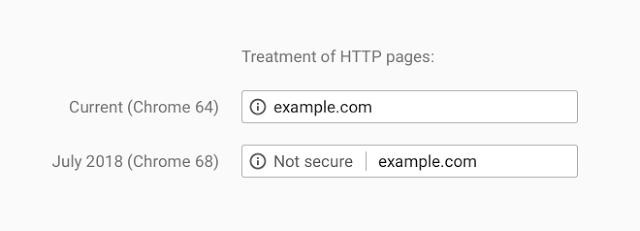
“Beginning in July 2018 with the release of Chrome 68, Chrome will mark all HTTP sites as ‘not secure.’” 1
Chrome's HTTP Page Labels
An example of how Chrome 68 will mark unsecure Websites.
The key word is all, and that’s because Google has been gradually phasing-in Web security requirements for certain kinds of Web pages. That will all change in July 2018, which is why it’s no longer just a good idea to update your practice or hospital Website security, but now a very, very, very strong recommendation to do so.

Don’t be Confused, We’ve Got You Covered

In case you don’t fully understand what any of this means—or its implications for your healthcare Website—don’t worry. As mentioned, we’ve been watching this closely, and we’ve said plenty about it our blog. We first suggest you visit Is Your Hospital Website Secure Enough for Google in 2017?, which we published in late 2016. In it, we addressed the basics of healthcare Web security, including:

• How to determine your Web security status

• How to update your Website security

We next encourage you to visit another piece we published last fall, Will Chrome 62 TLS/SSL Requirements Affect Your Users’ Experiences or Your Online Rankings?. This time, we addressed Chrome 62’s labeling of certain pages that weren’t secured and explained its:

• Potential impact to your SEO and SERPs (search engine result pages)

• Likely impact to your hospital Website conversions and patient conversion rates

• Possible impact to patient confidence in your brand

2018: The Year of Google Disruption?

Those that celebrate Chinese New Year know that 2018 is the “Year of the Dog.” Because the Guideway Care SEO team so closely follows Google, we’ve become inclined to say 2018 might also be called the “Year of Google Disruption.” We have a feeling this year will be a big year of changes on the Internet as it relates to Google. We’ve already seen a lot of disruption in keywords rankings in January 2018. We also know Google has been threatening to change to mobile-first indexing (from desktop-first) for more than a year, which will not bode well for Websites that are not responsive or don’t have a mobile version of their Website (and which we’ve also discussed in our blogs). For the moment, we can be 100-percent certain about Chrome 68’s impacts on Website security—although the question now is knowing exactly which day in July 2018 it will get launched!
As Guideway Care  Associate Director of Search Engine Marketing, Susan Gullion is one of our most knowledgeable resources for enhancing our healthcare clients’ search engine marketing strategies with SEO, PPC and social media. Guideway Care is a cloud-based technology and services company that improves profitability and patient outcomes for hospitals and practices through end-to-end patient engagement solutions backed by clinical and non-clinical teams. Its HIPAA-compliant, SaaS platform improves care team workflows, automates patient communication and tracks patient progress to optimize the patient journey. Since 2004, leading healthcare providers have trusted Guideway Care  to help acquire, manage and engage patients through complex episodes of care. 1A Secure Web is Here to Stay

2018 Healthcare Trends We Expect for Marketing, IT and CRM

It’s actually not that hard to make confident predictions about what will be the key trends for healthcare marketing and healthcare CRM in 2018, especially if you closely follow what’s going on in the healthcare industry. The trick is to take a few moments to step back from daily observations and to try to find common themes that are emergent. With that in mind, here are some trends we are anticipating for 2018!

Modifying Healthcare Marketing for Millennials

In 2018, healthcare marketing will take unprecedented steps to market healthcare to Millennials. There’s no reason to debate about the precise years for when this generation was born. The bottom line is most (if not all) Millennials are now solidly in adulthood, and that means they are the newest demographic in healthcare. There’s also no reason to discuss the finer points of what makes Millennials Millennials. All that needs to be said is they play by a different set of rules when it comes to how they make decisions and engage with brands—and this is a riddle healthcare marketers will be attempting to solve in 2018.

More Mobile-First

In 2018, healthcare marketing and IT will take unprecedented steps to adopt “Mobile-First.” We’re now in an era where it’s not enough to say “mobile healthcare” will be a trend. That’s already happened. In our most recent blog, “Five Key Mobile Website Design Tips for Hospitals and Clinics,” we touched on the subject of “mobile-first” as it relates to a major Google shakeup for healthcare SEO, and you can expect for us to talk more about this in 2018. Even if you aren’t familiar with the concept, the “mobile-first” term isn’t hard to discern: It’s the best practice of prioritizing mobile technologies over others. For SEO, it means search engines will first look to the mobile version of a Website to determine who gets the best SERP (search engine results) rankings. Mobile-first isn’t just about SEO though. Virtually anything that is part of a patient’s mobile device UX (user experience) — social media, apps, widgets, videos, etc. — will need to look and feel like it was a priority and not an afterthought.

IoT, mHealth and Telehealth Waits for Cybersecurity Improvements

In 2018, healthcare IT will take unprecedented steps to improve cybersecurity and open more doors for new medical technologies that can radically improve outcomes and revenues. We are also in an era where healthcare is grappling with with having both too much and too little—and it’s potentially stalling something great advances in healthcare. First, there’s too much access to patient information. On one hand, that’s wonderful—and it ties in nicely with more and more patients using the Internet (especially mobile devices) to find healthcare providers, engage with caregivers and improve their outcomes. On the other hand, access and information has put many hospitals at risk because there’s too little cybersecurity. (Unfortunately, the “ransomware” trend from the past couple years is probably going to continue in 2018.) Meanwhile, the medical device industry is aching to exploit the vast advantages of IoT (Internet of Things), mHealth (mobile health), telehealth and other platforms that can have monumental benefits for healthcare, both in terms of providing more and better care while reducing costs. The conflict is with how these innovative devices need access to all of that information—on largely underprotected networks. As a result, their potential is not being fully leveraged, which in turn slows continued innovation. For those reasons, you can be assured the healthcare and medical device communities will be putting significant effort into improving cybersecurity in 2018.
As Guideway Care Central/Western Regional Director, Chris Stearns is one of our most reliable resources for awareness of what is going on in our industry. Guideway Care is a cloud-based technology and services company that improves profitability and patient outcomes for hospitals and practices through end-to-end patient engagement solutions backed by clinical and non-clinical teams. Its HIPAA-compliant, SaaS platform improves care team workflows, automates patient communication and tracks patient progress to optimize the patient journey. Since 2004, leading healthcare providers have trusted Guideway Care to help acquire, manage and engage patients through complex episodes of care.

Bariatric Medical Practice Marketing Rules #1: Know Your Numbers

The First of a Four-Part Series of Advice for How to Grow Your Bariatric Practice

We regularly speak to many bariatric programs across the country, and we often hear how difficult it is to manage the day-to-day operations while keeping up with the hundreds of patients that are on their journey to bariatric surgery. Yet, no matter how many patients they have, nearly all want or need to increase their bariatric patient volumes. That is why we are frequently asked a simple but important question: “How can I get more patients and grow my bariatric practice?” Although there are no simple answers, we have been able to boil them down into four key rules that we explore in one of our most popular presentations, Four Key Strategies to Grow Your Bariatric Program. Which leads to the first rule: Know your numbers. Here is what we mean by that.

What are Your Numbers? Where are They?

Bariatric practice marketing is a numbers game you can play best if you have a firm grasp on your data. Otherwise, it is virtually impossible to develop strategies and gauge their effectiveness if you don’t know where you stand. Let’s start with some basics like:

• What are your conversion rates from lead to surgery?

• What is your average time to surgery?

• Which steps in the prospect-to-patient continuum are taking the longest?

• Where are patients falling through the cracks?

Now ask yourself:

• How quickly could you produce those numbers for analysis?

• How simple would the process for accessing them be?

• How reliable would the data you retrieved be?

The last set of questions can be as telling as the first set. We’ve found the bariatric practices that can easily and accurately track their patient marketing, acquisition, management and engagement are almost always the most successful practices.

Learn From Your Numbers

Knowing about your bariatric practice’s numbers is only the beginning. Once you’ve established an efficient process for monitoring your bariatric marketing efforts and collecting data, you next want analyze your numbers and starting learning from them. And what better way to learn is there than to ask questions? Here is where we divide our focus into two primary areas, each with their own sets of unique questions. For how many of these can you produce answers? Do any spark insights into where your bariatric practice marketing is underperforming? Bariatric Marketing and Patient Acquisition

• What is the conversion path of our marketing efforts?

• How many conversions resulted from the campaign?

• What is my cost per lead?

• How many surgeries resulted from the campaign?

• What is my cost per surgery?

• What payor mix is my marketing campaign driving?

• What is my most effective marketing medium?

• What is my least effective marketing medium?

• Of the surgeries we’ve performed, where did those leads come from?

Bariatric Patient Engagement and Management

• What is my conversion rate from lead to seminar registration:

• …from seminar registration to attendance?

• …from seminar attendance to consult?

• …from consult to surgery?

• What is my overall conversion rate from lead to surgery?

• What is the average throughput for each of these milestones?

• Where are patients falling through the cracks?

• How long have patients been in each step?

• What clearances need to be completed in order to have surgery?


As Guideway Care Central/Western Regional Director, Chris Stearns regularly engages with bariatric medical practices to find solutions that help grow their revenues and profitability. Guideway Care is a cloud-based technology and services company that improves profitability and patient outcomes for hospitals and practices through end-to-end patient engagement solutions backed by clinical and non-clinical teams. Its HIPAA-compliant, SaaS platform improves care team workflows, automates patient communication and tracks patient progress to optimize the patient journey. Since 2004, leading healthcare providers have trusted Guideway Care to help acquire, manage and engage patients through complex episodes of care.

Five Key Mobile Website Design Tips for Hospitals and Clinics

Now is the Perfect Time to Get Ready for Google Mobile-First Indexing

Late last year, we talked about the importance for healthcare Websites to be ready for Google mobile-first indexing to roll out in 2018, which can happen any day now! If you haven’t already, now is the perfect time to review some mobile Website design tips that can help your hospital or clinic improve the quality of your mobile users’ experience, which in turn should lead to improved search engine rankings and more conversions.

Analyze and Test Your Website

Google Mobile-First IndexingBefore you can improve your healthcare mobile Website design, you need to be positive it is ready for mobile-first indexing, which we discussed in “Google Mobile-First Indexing: Is Your Healthcare or Hospital Website Ready?” Once you’ve confirmed you are ready, the next step is to analyze its performance with Google Analytics. (If you’ve had to make some significant changes to get ready, allow a couple of weeks for new data to accumulate). Are there any pages that have unusually low traffic volumes? Or are there any calls to action that are demonstrating unusually high bounce rates? Looking at these types of metrics can quickly let you know the areas in which you’ll first want to improve.

Provide a Link to the Desktop Version

Always let your mobile visitors have the option to link to a complete desktop version of your healthcare Website. This may seem to contradict the whole purpose of having an optimized mobile Website, but some visitors may prefer to browse your desktop version on their mobile devices.

Use Simple Menus

Whether you choose to use collapsable “hamburger” menus, the most important mobile website design tip for menus (and submenus) is to keep them as simple as possible. Links to downloadable clinical trial report PDFs are an perfect example of what to prune from your menus. Healthcare mobile users are not likely to download or read such documents on their phones. If you must provide these types of links, consider asking users for their e-mail addresses so a link can be sent to them for downloading later.

Make Searches Fast and Intuitive

Mobile users heavily rely upon in-site searches, especially since menus are not as easy to navigate as they are on desktops—no matter how much you’ve simplified them for your mobile Website. Here are three key mobile Website design tips for making searches fast and intuitive:

• Don’t bury your search in a menu. Experiment with different types of searches that can can be initiated and completed without going into a menu. Explicit (visible) search bars are one of the best ways to start experimenting with what will work best for you, as are filters and questions to guide search queries.

• Optimize search result relevance. The better your search tools can provide relevant results, the faster users can find what they need.

• Make search results easy to view. Always remember your users are not on larger desktop screens, and therefore, it’s crucial they can quickly understand and navigate search results.

Be Selective with Calls to Action and Forms

This final healthcare Website design tip continues the theme for speed and simplicity, especially if your hospital or clinic heavily depends on your Website for patient acquisition. On your desktop Website, you have the luxury of asking prospects for information well beyond their names and contact information. But for mobile users, every extra field they’ll need to complete (even if optional) can make a form seem long and difficult to complete. If you find it difficult to reduce the scale of your conversion tools, consider running A/B tests with Google Analytics. Set your test to randomly display a shorter or longer version of a form and then measure their performance.
Tonni Islam is a Senior Designer at Guideway Care. Guideway Care is a cloud-based technology and services company that improves profitability and patient outcomes for hospitals and practices through end-to-end patient engagement solutions backed by clinical and non-clinical teams. Its HIPAA-compliant, SaaS platform improves care team workflows, automates patient communication and tracks patient progress to optimize the patient journey. Since 2004, leading healthcare providers have trusted Guideway Care to help acquire, manage and engage patients through complex episodes of care.

Google Mobile-First Indexing: Is Your Healthcare or Hospital Website Ready?

Google Mobile-First Indexing
The Long-Awaited Change in How Google Will Rank Healthcare and Hospital Websites is Just About Here

Since 2016, my colleagues in the SEO blogosphere have been regularly waxing about the importance of being prepared for Google to roll out its “mobile-first indexing.” Although it hasn’t yet to be launched, it is coming—and when it does, it is expected to have significant impacts on how healthcare and hospital Websites are ranked.

In recent months, several of our healthcare SEOand hospital Website design customers have asked us about mobile-first indexing. Here are some of their most frequently asked questions. As you read on, ask yourself: Is your hospital’s Website and SEO ready?

What is Google Mobile-First Indexing?

Google’s mobile-first indexing is the search engine’s conversion to using a mobile Website (rather than its desktop version) for ranking Web pages.

As to whythey are doing this, Google offered this explanation on its Official google Webmaster Central Blog:

“Today, most people are searching on Google using a mobile device. However, our ranking systems still typically look at the desktop version of a page’s content to evaluate its relevance to the user. This can cause issues when the mobile page has less content than the desktop page because our algorithms are not evaluating the actual page that is seen by a mobile searcher.”

How Will Mobile-First Indexing Affect My Healthcare SEO?

If your mobile Website provides the same information as your desktop Website, you probably won’t notice any difference in your SEO rankings. Actually, you might even see a boost in your rankings if you are competing against hospitals whose Websites are not ready for mobile-first indexing.

You might now be thinking, “What do you mean by ‘the same information?’” Why would it be different on a desktop or mobile Website?

The short answer is: It mostly depends on how your desktop and mobile Websites were design. This means:

• If you have a newer Website that was built with responsive design — meaning the site automatically adjusts its layout based on whether your visitors are using desktop or mobile browsers — you probably don’t need to worry.

• If your Website isn’t “responsive” but sends the same layout no matter the browser, you also probably don’t need to worry. (Note: Because responsive Websites generally deliver better user experiences, comparable Websites with responsive design will likely have better rankings.)

• If your Website uses different URLs for canonical and mobile browsers, you might not be sending the same information. This could range from minor inconsistencies between what is on the desktop and mobile pages to significantly abridged content on a mobile page.

• If your mobile Website uses AMP (Accelerated Mobile Pages), you might not be sending the same information. A typical example of different information would be when an AMP shows a snippet of a desktop page with a link to read it in its entirety. These types of AMPs will hurt your SEO because it’s not supporting what Google considers to be a positive user experience.

If your Website is not ready for mobile-first indexing, it’s probably best to update or overhaul your Website to a responsive design. But, if budgetary or time constraints prohibit that, your best bet is to prioritize the Web pages that can’t afford to be dinged by mobile-first indexing and start analyzing/updating them.

When Does My Hospital Website Need to be Ready for Mobile-First Indexing?

For all the chatter there’s been the past year about mobile-first indexing and the need to be ready for it, there’s still no set date for when Google will enact it. There is a good possibility that Google has been testing this new indexing strategy over the past year and we won’t see an exact date for its final roll-out. Our recommendation is to be proactive now before you see a drop in visitors to your Website.


As Guideway Care Associate Director of Search Engine Marketing, Susan Gullion is one of our most knowledgeable resources for enhancing our healthcare clients’ search engine marketing strategies with SEO, PPC and social media.

Guideway Care is a cloud-based technology and services company that improves profitability and patient outcomes for hospitals and practices through end-to-end patient engagement solutions backed by clinical and non-clinical teams. Its HIPAA-compliant, SaaS platform improves care team workflows, automates patient communication and tracks patient progress to optimize the patient journey. Since 2004, leading healthcare providers have trusted Guideway Care to help acquire, manage and engage patients through complex episodes of care.

Will Chrome 62 TLS/SSL Requirements Affect Your Users’ Experiences or Your Online Rankings?

Now is the Time to Update Your Hospital Website Encryption to Avoid the Dreaded Chrome 62 ‘Not Secure’ Label

As 2016 came to a close, we published a blog with a title that asked a simple but important question: “Is Your Hospital Website Secure Enough for Google in 2017?” Now in October 2017, the Chrome SSL Warning question is more relevant than ever. This month, Google is expected to release Chrome 62, which will mark Website pages without TLS/SSL encryption as “Not Secure”. It’s never too late to get your Website’s security up to spec for Chrome or all other browsers. But because this update may also impact your healthcare search engine optimization (SEO) and digital healthcare marketing results, there is no time like the present to make sure you are compliant for Chrome 62 and beyond.

Is Your Hospital Website ‘Secure’ for Chrome?

First, test your hospital Website’s security on Chrome:

• Open your Chrome browser

• Type in your hospital Website address

• Let the page load

• Look for the icon that appears in the address bar to the left of the URL

Do you see a green lock icon in the address bar?

• Yes! Hooray, your hospital Website is secure!

• No! Sorry, but your Website is not what Chrome considers “secure.”

Chrome 62’s Greatest Threat: Your Conversions and Patient Acquisition for All Web Browsers

It’s no secret that Google wants you to use TLS/SSL security. Along with the implications of its upcoming Chrome 62 update, even as early as 2014, Google has been clear it would give more SEO juice to secured Websites. There continues to be no hard evidence that not having a secure hospital Website will hurt your Page rank, SERP positions, etc. What is certain is that not having a TLS/SSL will very like hurt your Website conversions—and thus, your patient acquisition rates. This cuts across all Web browsers, too. There are two reasons for this.

• You Must Respect Chrome’s Popularity: Chrome’s status as the most widely used Web browser (estimated to be used by at least 55 percent of all Internet users) means anything that keeps you from using it for patient acquisition is a major disadvantage.

If your Website is not secure, you are potentially discouraging more than half of your entire Website visitor traffic to complete an online form.

• Poor User Experiences Hurts SEO: If Chrome users suddenly start abandoning your Website because they are scared off by “Not Secure” warnings, sooner or later, it will drag your SEO down—which could result in lower traffic, and thus, lower conversions, regardless of browser.

Patient Confidence: A Lesser Threat, but a Threat All the Same

If you need one more reason to improve your Website security, let it be patient confidence in your brand. Although Website and internal EMR/EHR data (and their security) are usually two entirely separate things, with growing public awareness about healthcare cybersecurity risks, your visitors and patients may presume that if your Website is not secure, then the rest of your digital medical information isn’t either.
As Guideway Care Associate Director of Search Engine Marketing, Susan Gullion is one of our most knowledgeable resources for enhancing our healthcare clients’ search engine marketing strategies with SEO, PPC and social media. Guideway Care is a cloud-based technology and services company that improves profitability and patient outcomes for hospitals and practices through end-to-end patient engagement solutions backed by clinical and non-clinical teams. Its HIPAA-compliant, SaaS platform improves care team workflows, automates patient communication and tracks patient progress to optimize the patient journey. Since 2004, leading healthcare providers have trusted Guideway Care to help acquire, manage and engage patients through complex episodes of care.

Google Tips for Medical & Healthcare SEO and PPC: August 2017

The New Google Search Console is Here

As with so many things related to Google and healthcare SEO, this announcement may be a bit binary. It’s likely that you either already are aware of the Google Search Console (which has been around for more than a decade with various names, including “Google Webmaster Central” and “Google Webmaster Tools) and use it, or you don’t. If you are in the first camp, then you should be excited about the new features shared about the Console at the Google Webmaster Central blog. If you are in the latter, you will also likely find it exciting, not only because this free product “includes more than two dozen reports and tools covering AMP [Accelerated Mobile Pages], structured data, and live testing tools, all designed to help improve your site’s performance on Google Search,” but for a very important new report: Index Coverage. The other exciting and potentially related feature is better organizational workflow support. As Google explains, “multiple people are typically involved in implementing, diagnosing, and fixing issues,” which is why it is “introducing sharing functionality that allows you to pick-up an action item and share it with other people in your group.”

The Takeaways

If you know what search engine indexing is, then there’s no need to explain its importance to your hospital Website SEO. If you don’t know what indexing is, here’s a simple explanation: It’s the process of a search engine discovering (known as “crawling”) the contents of your Website (which is learned from a “site map”). Have you ever heard the philosophical question, “If a tree falls in the woods and nobody hears it, does it make a sound?” Well, there’s no debate about indexing: If your hospital Website is not indexed, the search engines won’t crawl it, and nobody can search for it. Thus, the Index Coverage report is a very convenient tool to discover which of your hospital Website pages are (or more importantly, aren’t) being indexed—and what you can probably do to quickly fix problems. For that matter, the Console’s improved workflow capabilities should be beneficial no matter how experienced you are with the Console. For instance, if you handle your organization’s healthcare SEO and find an indexing problem but don’t know how to get a sitemap generated or submitted to search engines, you can now task this to the appropriate IT person/people.

Google AdWords Express Rolls Out New “Goals”

No matter whether your monthly healthcare PPC budgets are in the hundreds or the ten of thousands, demonstrating ROI (return-on-investment) is always crucial to ensuring the ongoing support for this type of digital healthcare marketing tactic. One of the best ways to achieve that is to be able to report “conversions,” which can now be measured as “goals” for Google AdWords Express users. In that context, this more likely is of interest to the healthcare PPC marketing with smaller campaigns—either in terms of budgets or ad volumes. That is because AdWords Express is Google’s comparatively leaner PPC tool that is “aimed to make it easy to set up ads on Google,” as compared to its more complex, full-scale AdWords service. AdWords Express now makes it possible to easily get performance metrics for goals that include:

• Calls to Your Business

• Visits to Your Storefront

• Actions Taken on Your Website

The Takeaways

For more casual or smaller-scale healthcare PPC marketers, being able to track these goals can be very useful not only for your own edification about how well your campaigns are performing, but also to others in your organization involved with its marketing. For instance, hospital PPC ads that lead visitors to your hospital’s Website may earn you a “point” for your efforts, but getting visitors to your Website is only half the battle. The bigger goal for your organization should be to strategically drive those visitors to another conversion/goal/call-to-action, which you may improve by sharing your PPC goal metrics with whomever develops your hospital Website marketing objectives. Furthermore, more actively engaging with your healthcare PPC metrics may encourage you to expand the scope of your campaigns—including budgets and volumes (which may further inspire you to explore the potential of using the full-scale AdWords service).
As Guideway Care Associate Director of Search Engine Marketing, Susan Gullion is one of our most knowledgeable resources for enhancing our healthcare clients’ search engine marketing strategies with SEO, PPC and social media. Guideway Care is a cloud-based technology and services company that improves profitability and patient outcomes for hospitals and practices through end-to-end patient engagement solutions backed by clinical and non-clinical teams. Its HIPAA-compliant, SaaS platform improves care team workflows, automates patient communication and tracks patient progress to optimize the patient journey. Since 2004, leading healthcare providers have trusted Guideway Care to help acquire, manage and engage patients through complex episodes of care.